

Quick Answer: How to Clean and Care for a Dark Grey Fabric Sofa?To clean a dark grey fabric sofa, vacuum weekly with an upholstery attachment, blot fresh spills immediately with a clean dry cloth, and use a mild washing-up liquid solution for marks. Always check your sofa’s cleaning code first. Deep clean every six to twelve months to keep it looking its best.
A dark grey fabric sofa is one of the most practical choices you can make for a UK living room. But even the most forgiving sofa colour needs proper care to stay looking great year after year.
The good news is that cleaning and maintaining a dark grey fabric sofa is simpler than most people think. You don’t need expensive equipment. You don’t need a professional every few months. You just need the right knowledge — and the right habits.
This guide covers everything. From weekly maintenance to tackling stubborn stains, from fabric-specific advice to long-term care tips that genuinely extend the life of your sofa.
Read Your Cleaning Label First — Every Time

Before you use any product on your sofa, check the cleaning label.
Every fabric sofa carries a cleaning code. It’s usually found on a small label underneath a cushion or on the sofa frame. This code tells you exactly what cleaning methods are safe for your specific fabric.
Here’s what each code means:
| Code | Meaning |
|---|---|
| W | Water-based cleaners are safe |
| S | Solvent-based cleaners only — no water |
| WS | Both water and solvent-based cleaners are safe |
| X | Vacuum only — no liquid cleaners at all |
Most dark grey fabric sofas — including chenille, plush velvet, and jumbo cord — carry a W or WS code. This means water-based cleaning solutions are safe to use.
Using the wrong cleaner on the wrong fabric can cause permanent damage. Always check the code before reaching for any cleaning product.
💡 Pro Tip: Before using any cleaning solution on a visible area, always test it on a hidden patch of fabric first — underneath a cushion or on the back of the sofa. Leave it for a few minutes and check for any discolouration or damage. This one step takes thirty seconds and can save your sofa.
Weekly Maintenance — The Habits That Make the Biggest Difference

Consistent weekly care prevents dirt from building up and keeps your dark grey sofa looking fresh between deeper cleans.
Vacuum once a week
Use your vacuum cleaner’s upholstery attachment. Set it to a low suction setting — particularly important for velvet and chenille fabrics, which can be damaged by powerful suction.
Work across all surfaces systematically. Don’t forget the back of the sofa, the sides, and underneath the seat cushions. Crumbs and debris collect in the gaps and can work their way into the fabric over time.
Brush velvet and chenille regularly
For sofas in plush velvet or chenille, a soft upholstery brush used weekly helps lift the pile and keep the fabric looking fresh. Brush gently in one direction — always in the direction of the pile, never against it.
Rotate and flip cushions monthly
Most people sit in the same spot. Over time, this creates uneven wear — one cushion compresses while others stay plump. Rotate your cushions monthly and flip them where the cover design allows. This simple habit extends the life of your sofa significantly.
Plump cushions after every use
Push the filling back towards the centre after sitting. Encourage it to redistribute evenly. For fibre-filled cushions, unzip the cover occasionally and separate the fibres by hand to prevent matting.
💡 Pro Tip: Keep your dark grey sofa away from direct sunlight where possible. Even dark grey fabric can fade with prolonged UV exposure. If your sofa sits near a window that receives strong afternoon sun, use curtains or blinds during peak sunlight hours — or rotate the cushions regularly to ensure any fading happens evenly.
How to Deal With Fresh Spills — Act Fast
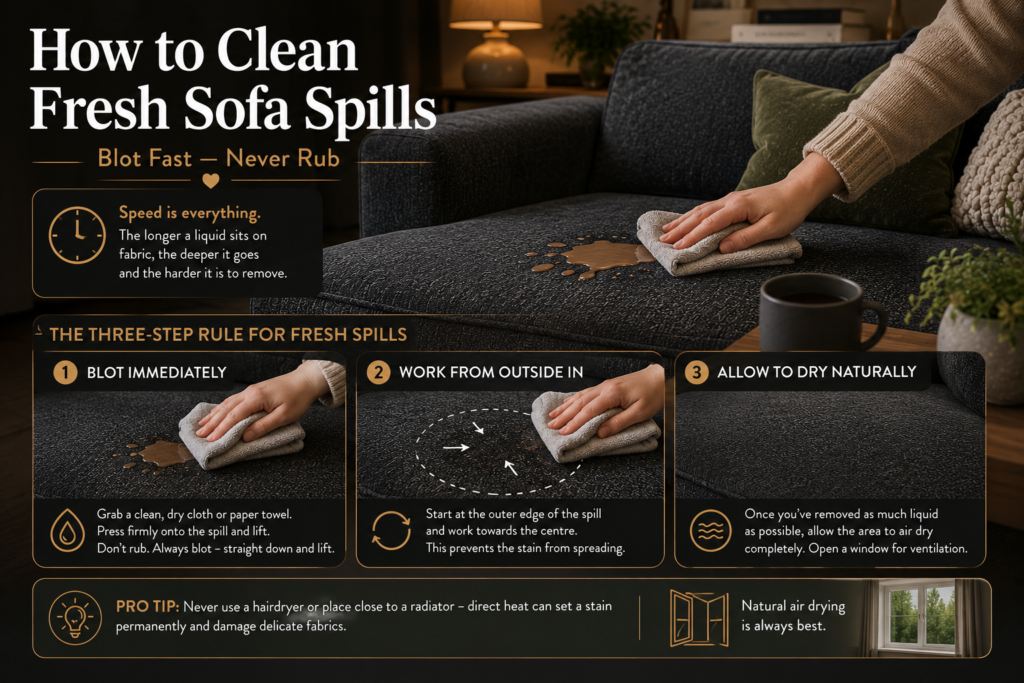
Speed is everything when a spill happens. The longer a liquid sits on fabric, the deeper it penetrates and the harder it becomes to remove.
The three-step rule for fresh spills:
Step 1 — Blot immediately Grab a clean, dry cloth or paper towel. Press firmly onto the spill and lift. Don’t rub. Rubbing spreads the liquid and pushes it deeper into the fabric fibres. Always blot — straight down and lift.
Step 2 — Work from the outside in Start blotting at the outer edge of the spill and work towards the centre. This prevents the stain from spreading outward as you clean.
Step 3 — Allow to dry naturally Once you’ve removed as much liquid as possible, allow the area to air dry completely. Open a window to improve ventilation. Never use a hairdryer or sit close to a radiator — direct heat can set a stain permanently and damage delicate fabrics.
For most everyday spills — tea, coffee, juice, food — this three-step process is sufficient on a dark grey fabric sofa. The colour works in your favour here. Light stains that might be clearly visible on a cream sofa simply blend in far more gracefully on dark grey fabric.
How to Remove Common Stains From a Dark Grey Fabric Sofa

Tea and Coffee Stains
Blot away as much liquid as possible first. Then mix one teaspoon of mild washing-up liquid with a cup of cool water. Dip a clean cloth into the solution, wring it out so it’s damp but not wet, and gently dab at the stain. Work from the outside edges inward. Rinse by dabbing with a clean damp cloth and blot dry.
Food and Grease Stains
Sprinkle a small amount of bicarbonate of soda over the stain. Leave it for fifteen to twenty minutes to absorb the grease. Gently brush away with a soft brush, then vacuum. Follow with the mild washing-up liquid solution described above if any mark remains.
Red Wine
Act immediately. Blot away as much wine as possible. Apply a small amount of sparkling water to the area — the carbonation helps lift the stain. Continue blotting. Follow with the mild washing-up liquid solution once the bulk of the stain has been removed.
Mud and Dirt
Allow mud to dry completely before attempting to clean it. Trying to clean wet mud simply spreads it further. Once dry, use a soft brush to break up the dried mud and vacuum away the debris. Then treat any remaining mark with the mild washing-up liquid solution.
Ink and Biro
Dab a small amount of rubbing alcohol or surgical spirit onto a clean cloth. Gently blot — never rub — at the ink mark. Work carefully from the outside in. This can take several attempts. Always test on a hidden area first. For stubborn ink stains, a specialist upholstery stain remover may be needed.
Odours
Sprinkle bicarbonate of soda generously across the entire sofa surface. Leave it for at least twenty minutes — ideally a few hours. The bicarbonate naturally absorbs odours from the fabric. Vacuum away thoroughly using the upholstery attachment. This works beautifully for pet smells, food odours, and general mustiness.
💡 Pro Tip: For any stain you’re unsure about, always start with the gentlest method first — plain cool water and blotting. Escalate to the washing-up liquid solution only if water alone isn’t sufficient. Escalate to a specialist cleaner only if that fails. The gentlest effective method is always the right one for fabric sofas.
If you are comparing sizes for your room, a 5 seater sofa can be a practical option to consider alongside fabric and colour choices.
How to Deep Clean a Dark Grey Fabric Sofa

Deep cleaning every six to twelve months keeps your sofa genuinely fresh and significantly extends its lifespan.
What you’ll need:
- Vacuum cleaner with upholstery attachment
- Soft upholstery brush
- Clean white cloths (several)
- Mild washing-up liquid
- Warm water
- Bicarbonate of soda
- Spray bottle (optional)
Step-by-step deep clean process:
1. Vacuum thoroughly: Remove all cushions. Vacuum every surface — seat, back, sides, arms, and base. Use the crevice tool to get into all the gaps and seams.
If your sofa has a plush finish, it is worth checking velvet fabric care guidance before using any cleaning method.
2. Bicarbonate of soda treatment: Sprinkle bicarbonate of soda across all fabric surfaces. Leave for at least thirty minutes. This deodorises and lifts surface dust simultaneously. Vacuum away completely.
3. Spot treat any marks: Go over the entire sofa carefully and identify any marks or stains. Treat each one individually with the appropriate method from the stain guide above.
4. Overall fabric clean: Mix a mild solution of washing-up liquid and warm water (one teaspoon of liquid per litre of water). Dampen a clean cloth — it should be damp, not wet. Work across the sofa in sections, using gentle circular motions. Change cloths regularly to avoid redistributing dirt.
5. Rinse: Wipe down with a clean cloth dampened with plain water only to remove any soap residue.
6. Dry thoroughly: Open windows. Allow the sofa to air dry completely before replacing cushions or sitting on it. This usually takes two to four hours depending on how much moisture was used.
For deeper or more stubborn issues, the FurniFolks furniture care guide provides specific guidance for each fabric in the collection — including plush velvet, chenille, crushed velvet, and jumbo cord.
Fabric-Specific Care for Dark Grey Sofas

Different fabrics need slightly different care. Here’s a quick reference guide:
| Fabric | Vacuuming | Brushing | Water Safe | Special Notes |
|---|---|---|---|---|
| Plush Velvet | Low suction only | Soft brush, with the pile | Yes (W/WS) | Avoid rubbing — always blot |
| Crush Velvet | Low suction only | Soft brush gently | Yes (W/WS) | Crush pattern is intentional — don’t try to flatten |
| Chenille | Normal upholstery setting | Soft brush weekly | Yes (W/WS) | Very durable — responds well to mild cleaning solutions |
| Jumbo Cord | Normal upholstery setting | Brush along the grain | Yes (W/WS) | Easy to clean — one of the most practical fabrics available |
All fabrics in the FurniFolks dark grey sofa range can be cared for using the methods described in this guide. Always refer to your specific sofa’s care label for confirmation.
Long-Term Care Tips That Genuinely Make a Difference
These habits extend the life of your dark grey sofa significantly over time.
Apply fabric protector before first use — A quality fabric protection spray creates an invisible barrier that helps liquids bead up rather than soaking in immediately. Apply before the sofa is used for the first time. Reapply every six to twelve months.
Keep pets’ claws trimmed — Regular trimming is the most effective way to protect fabric from claw damage over time.
Avoid eating directly on the sofa — Or use a tray. This one habit prevents the majority of food stains before they happen.
Use armrest covers if needed — Armrests receive more concentrated wear than the rest of the sofa. A removable cover protects the fabric in the highest-contact area.
Book a professional clean every three to five years — Even with excellent home maintenance, a professional upholstery clean every few years makes a noticeable difference. A professional can reach deep into the fabric and extract accumulated dust, allergens, and embedded debris that home cleaning cannot fully address.
💡 Pro Tip: Never wash removable sofa cushion covers in a washing machine unless the label specifically states it is safe to do so. Even at low temperatures, machine washing can shrink covers, affect fire-retardant treatments, and cause colours to bleed. Spot clean covers where possible and follow the care label precisely.
What Not to Do — Common Cleaning Mistakes
Knowing what to avoid is just as important as knowing what works.
Don’t rub stains — Rubbing always makes a stain worse. It spreads the mark, pushes liquid deeper into the fabric, and can permanently damage the pile on velvet and chenille.
Don’t use too much water — Over-wetting fabric can cause watermarks, encourage mould growth inside the sofa, and damage internal components. Always use a damp cloth — never a soaking wet one.
Don’t use harsh chemicals — Bleach, strong detergents, and solvent-based cleaners not marked as safe for your fabric can cause permanent discolouration and damage.
Don’t dry with heat — Hairdryers, radiators, and direct sunlight can set stains permanently and damage or shrink fabric.
Don’t ignore small marks — Small marks are infinitely easier to remove when fresh. A mark left for days or weeks becomes dramatically harder to clean.
Summing Up
Caring for a dark grey fabric sofa is genuinely straightforward when you know what to do. Weekly vacuuming, prompt attention to spills, and a thorough deep clean twice a year — that’s the core of it.
Dark grey fabric is one of the most forgiving sofa colours to maintain. It hides the small everyday marks that would stand out on a lighter sofa, which means your maintenance routine can be consistent rather than constant.
Follow the habits and methods in this guide and your dark grey sofa will look beautiful for years. It’s an investment worth protecting — and with the right care, it will reward you with comfort, style, and lasting good looks for a very long time.
Frequently Asked Questions
How do I clean a dark grey fabric sofa at home? Vacuum weekly with an upholstery attachment, blot fresh spills immediately with a clean dry cloth, and use a mild washing-up liquid solution diluted in cool water for marks. Always check your sofa’s cleaning code first and test any solution on a hidden area before use.
Can I use bicarbonate of soda on a dark grey sofa? Yes — bicarbonate of soda is excellent for deodorising fabric sofas. Sprinkle generously over the surface, leave for twenty to thirty minutes, then vacuum away thoroughly. It’s safe for most fabric types and very effective at neutralising odours.
How often should I deep clean my fabric sofa? Every six to twelve months is recommended for most UK households. Homes with children, pets, or heavy daily use may benefit from deep cleaning every four to six months.
What is the best way to remove tea stains from a dark grey sofa? Blot the spill immediately to remove as much liquid as possible. Then apply a mild solution of washing-up liquid and cool water with a clean damp cloth. Work from the outside of the stain inward, blotting gently. Rinse with a plain damp cloth and allow to air dry.
Can I use a steam cleaner on my fabric sofa? Only if your sofa’s cleaning label indicates it is safe to do so. Some fabric sofas can be steam cleaned, but others cannot tolerate the moisture or heat. Always check the care label and test in a hidden area first.
How do I keep my dark grey sofa looking new for longer? Apply a fabric protector spray before first use and reapply annually. Vacuum weekly. Rotate and flip cushions monthly. Blot spills immediately. Keep the sofa away from direct sunlight. These five habits make a significant difference to the long-term appearance of any fabric sofa.
Now that you know how to keep your dark grey sofa looking its best, the next question many UK homeowners ask is what wall colour works best with it. The right wall colour behind your sofa ties the whole room together — and makes the sofa itself look even better. Read our guide on the best wall colours for a dark grey sofa for expert advice and practical inspiration.