

Quick Answer: Thinking about how to clean a Velvet Sofa? To clean a velvet sofa, vacuum weekly with a soft brush attachment on low suction, brush the pile gently in one direction, blot fresh spills immediately with a clean dry cloth, and spot clean with a barely-there foam solution of mild soap and water. Never rub. Never soak. Always air dry. Brush the pile back up once fully dry.
You fell in love with your velvet sofa the moment you saw it.
That rich colour. That soft, luxurious pile. The way it catches the light is different from every angle. It looked like something from a high-end interior design magazine — and you brought it home.
Now you’re wondering how on earth to keep it looking that way.
Here’s the great news. Velvet is far less fragile than most people think. Modern velvet sofas — especially synthetic and plush velvet — handle everyday UK family life better than their reputation suggests. You just need the right approach.
This guide covers everything. Weekly care, stain removal, deep cleaning, pile restoration, and the mistakes that cause real damage. Follow it and your velvet sofa will stay stunning for years.
Know Your Velvet Type Before You Start

Not all velvet sofas clean the same way. Knowing your velvet type prevents accidental damage — so check this first.
Synthetic velvet (plush velvet) — The most common type in UK homes. Durable, stain-resistant, and far easier to clean than natural velvets. Most dark grey sofa use plush velvet — one of the most practical velvet options available. Water-based cleaning is safe. Look for a W or WS cleaning code label.
Crush velvet — A synthetic velvet with a deliberately crushed, textured finish. The crushed pattern is intentional — don’t try to flatten or restore it. Clean gently with minimal moisture. Never brush vigorously.
Cotton velvet — A natural velvet with a softer, more organic feel. More delicate than synthetic. Uses minimal moisture. Prone to watermarks if over-wetted. Handle with extra care.
Silk or antique velvet — The most delicate of all. Found in luxury and antique pieces. Home cleaning carries real risk. Professional cleaning is always the safer option for these.
Check the cleaning code label — usually underneath a cushion or on the sofa frame. W or WS means water-based cleaning is safe. S means solvent only. X means vacuum only.
💡 Pro Tip: Before using any cleaning solution on your velvet sofa — even one confirmed safe for your fabric — test it on a completely hidden area first. The underside of a back cushion or the panel behind the sofa near the floor works perfectly. Wait ten minutes. If the colour holds and the pile looks undamaged, proceed with confidence.
Weekly Care — The Habits That Protect Your Velvet
Weekly care keeps your velvet sofa looking fresh and prevents dirt from embedding deep in the pile. It takes five minutes. It makes a real difference.
Vacuum once a week
This is the single most important weekly habit for a velvet sofa.
Use the soft brush attachment on your vacuum. Set the suction to low — never use high suction directly on velvet. High suction pulls the pile fibres and causes flattening that’s difficult to reverse.
Vacuum in the direction of the pile — always with the fibres, never against them. Work systematically across every surface — seat cushions, backrest, armrests, and sides. Use the crevice tool gently along the seams.
For Chesterfield-style velvet sofas with deep button detailing — use a soft-bristled toothbrush to dislodge dust from around the buttons first, then vacuum it away.
Brush the pile weekly
A dedicated velvet or upholstery brush used weekly lifts the pile and restores the fabric’s natural sheen. Brush gently in one consistent direction — always following the direction the fibres naturally sit.
This one habit alone keeps a velvet sofa looking professionally maintained between deeper cleans.
Rotate and plump cushions
Rotate seat cushions monthly to distribute wear evenly. Plump and reshape cushions after every use. Velvet shows pressure marks more visibly than flat fabrics — regular rotation prevents one area from looking flattened while others stay pristine.
💡 Pro Tip: Run your hand lightly across your velvet sofa regularly. Feel for any areas where the pile sits differently or feels slightly compacted. Catch these early and a gentle brush in the pile direction restores them completely. Left for weeks, compacted pile becomes much harder to lift — and sometimes needs steam to revive it.
How to Deal With Fresh Spills on Velvet

Speed is everything on velvet. Act within seconds — not minutes — and most spills leave no trace.
Step 1 — Blot immediately
Grab a clean dry cloth or paper towel. Press firmly onto the spill and lift straight up. Never rub — rubbing flattens the pile and spreads the liquid deeper into the fibres simultaneously. Blot only. Straight down and lift.
Step 2 — Work from the outside in
Start blotting at the outer edge of the spill and work toward the centre. This stops the stain from spreading outward as you work.
Step 3 — Keep blotting until dry
Continue with fresh sections of clean cloth until you’ve absorbed as much liquid as possible. The more you remove now, the less work you have later.
Step 4 — Air dry naturally
Allow the area to dry completely at room temperature. Open a window for airflow. Never use a hairdryer — the heat flattens velvet pile permanently. Never place the sofa near a radiator to speed drying. Natural air only.
Step 5 — Brush the pile back up
Once fully dry, brush the pile gently in its natural direction with a velvet brush. This restores the texture and removes any traces of the spill’s outline.
How to Spot Clean a Velvet Sofa | Pro Tips
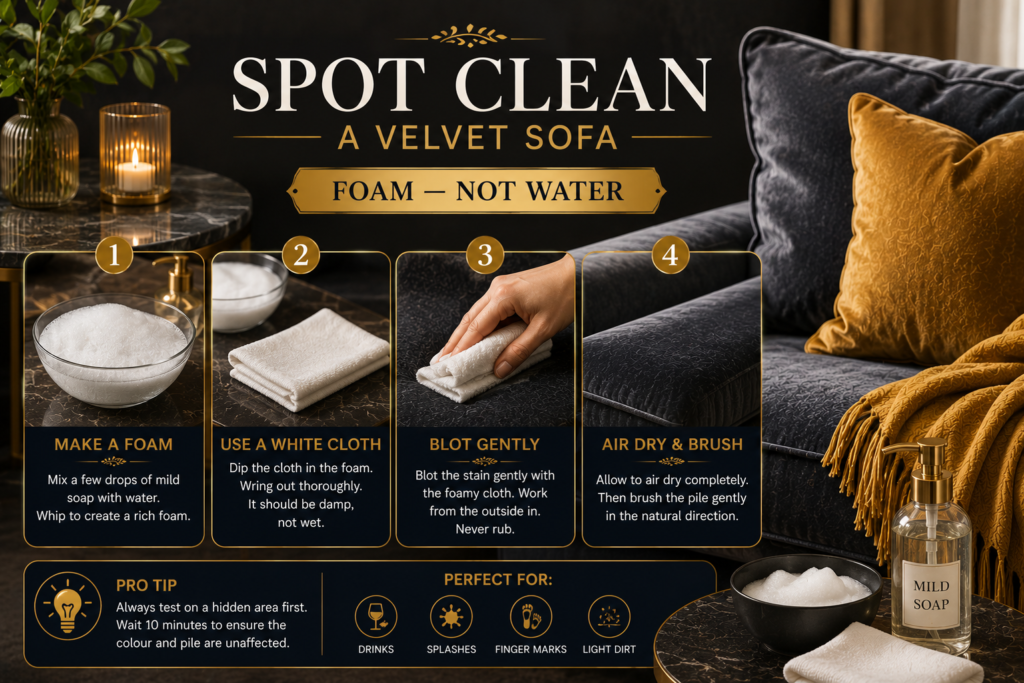
For marks that need more than blotting alone — spot cleaning is the answer.
The key with velvet is to use foam — not liquid. Liquid soaks into the pile and causes watermarks. Foam sits on the surface and cleans without over-wetting.
How to make a safe cleaning foam:
Add two or three drops of mild washing-up liquid to a bowl of lukewarm water. Whisk vigorously until you have a layer of foam on the surface. You want the foam — not the water beneath it.
How to apply it:
Scoop a small amount of foam onto a clean white cloth. Dab it gently onto the stained area. Press — don’t rub. Work from the outside of the mark inward. Use very light pressure. The foam lifts the mark from the surface without driving moisture deep into the pile.
Rinse and dry:
Dab the area with a fresh cloth barely dampened with plain cool water to remove any soap residue. Then blot dry with a clean dry cloth. Air dry completely. Brush the pile back up once fully dry.
If you are comparing sizes for your room, a 5 seater sofa may need the same gentle vacuuming and spot-cleaning routine to keep the velvet pile looking even.
If you are planning a room refresh, sliding wardrobes can help you save floor space while keeping the layout feeling open around a velvet sofa.
💡 Pro Tip: Always use white cloths on velvet. Coloured cloths can transfer dye onto the velvet pile — particularly on lighter-coloured sofas. A small pack of white microfibre cloths kept near your sofa means you’re always ready to act the moment a spill happens. Quick action and white cloths are the two most important tools for velvet sofa care.
How to Remove Common Stains From a Velvet Sofa

Tea and Coffee
Blot immediately — remove as much liquid as possible before it soaks into the pile.
Apply the foam method described above. Work gently from the outside in. Rinse with a barely damp plain cloth. Air dry. Brush the pile back up once completely dry.
For stubborn tea or coffee marks, a small amount of white vinegar diluted in water (one part vinegar to four parts water) applied as a foam can help lift the tannin staining. Always test on a hidden area first.
Red Wine
Act immediately — this one punishes hesitation.
Blot as much wine as possible with a clean dry cloth. Apply a small amount of sparkling water to the area — the carbonation helps lift the wine from the pile fibres. Continue blotting. Follow with the foam method if any colour remains. Rinse, dry, and brush the pile back.
Grease and Food
Sprinkle a small amount of cornstarch or bicarbonate of soda directly onto the greasy area. Leave for twenty to thirty minutes — it draws the grease out from the pile. Brush away gently with a soft brush. Vacuum away the residue. Follow with the foam method if any mark remains.
Mud
Leave it to dry completely before touching it. Wet mud on velvet spreads on contact. Once fully dry, use a soft brush to break up the dried mud and vacuum away the debris gently. Treat any remaining mark with the foam method.
Ink and Biro
Dab a tiny amount of rubbing alcohol onto a clean white cloth. Blot very gently — never rub — at the ink mark. Work from the outside in. This takes several careful attempts. Always test rubbing alcohol on a hidden area of the velvet first. For stubborn or dried ink, a specialist upholstery stain remover designed for delicate fabrics is the safest option.
Pet Hair
Velvet attracts pet hair. A lint roller handles most of it quickly. For embedded hair between pile fibres, use a slightly damp rubber glove — run it across the surface in one direction. The static lifts the hair effectively without damaging the pile.
How to Deep Clean a Velvet Sofa | Expert Overview
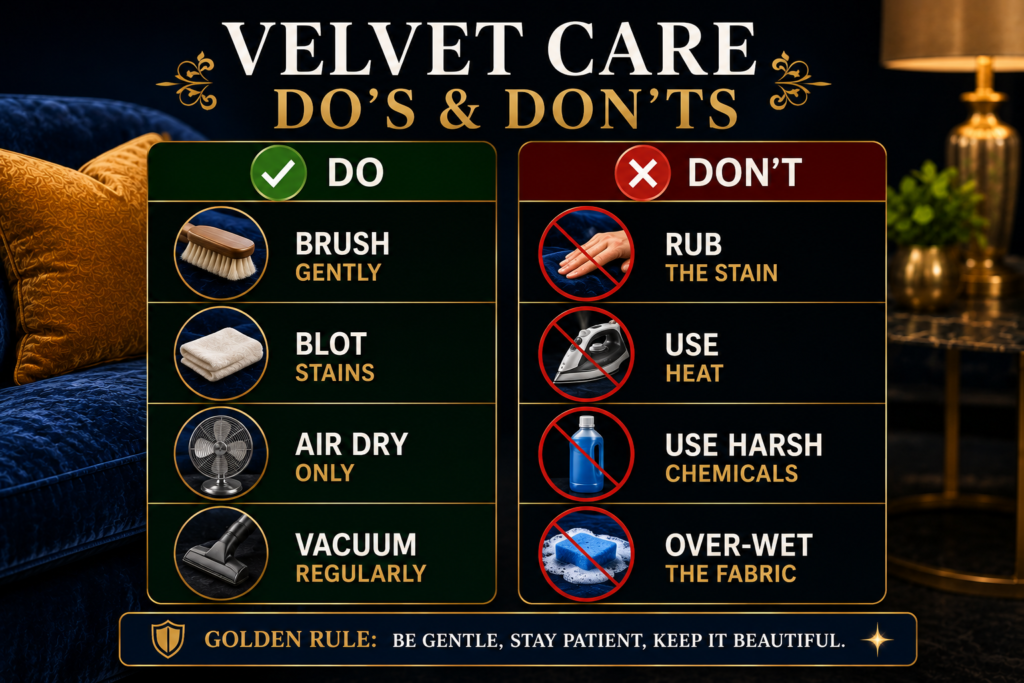
Deep clean every six to twelve months — or whenever the sofa starts to look a little dull or tired.
What you need:
- Vacuum with soft brush attachment
- Velvet or upholstery brush
- Clean white microfibre cloths
- Mild washing-up liquid
- Lukewarm water
- Bicarbonate of soda
Step-by-step process:
1. Remove cushions and vacuum everything Take all cushions off. Vacuum every surface on low suction — in the direction of the pile throughout. Use the crevice tool on seams and gaps.
2. Bicarbonate of soda treatment Sprinkle bicarbonate of soda across all fabric surfaces. Leave for twenty to thirty minutes. It deodorises and lifts surface dust from deep in the pile. Vacuum away every trace on low suction.
3. Spot treat all visible marks Go over the entire sofa in good light. Treat every visible mark individually using the relevant stain method above. Allow each area to dry before moving on.
4. Foam clean the whole surface Prepare your mild foam solution. Work across the sofa in sections using white cloths. Light dabbing motions — never circular rubbing. Change cloths regularly.
5. Rinse Wipe over with a fresh cloth barely dampened with plain cool water. Remove all soap residue.
6. Air dry fully Open windows. Allow the sofa to dry completely at room temperature — two to four hours minimum.
7. Brush the pile back up Once completely dry, brush the entire sofa with a velvet brush in one consistent direction. Watch the colour deepen and the sheen return. This is genuinely one of the most satisfying moments in home care.
💡 Pro Tip: Deep clean your velvet sofa on a dry UK day with good airflow through open windows. Velvet holds moisture longer than most fabrics. Good ventilation speeds drying significantly and prevents any musty smell from developing in the pile. Timing the clean well makes a noticeable difference to the final result.
How to Restore Flattened Velvet Pile
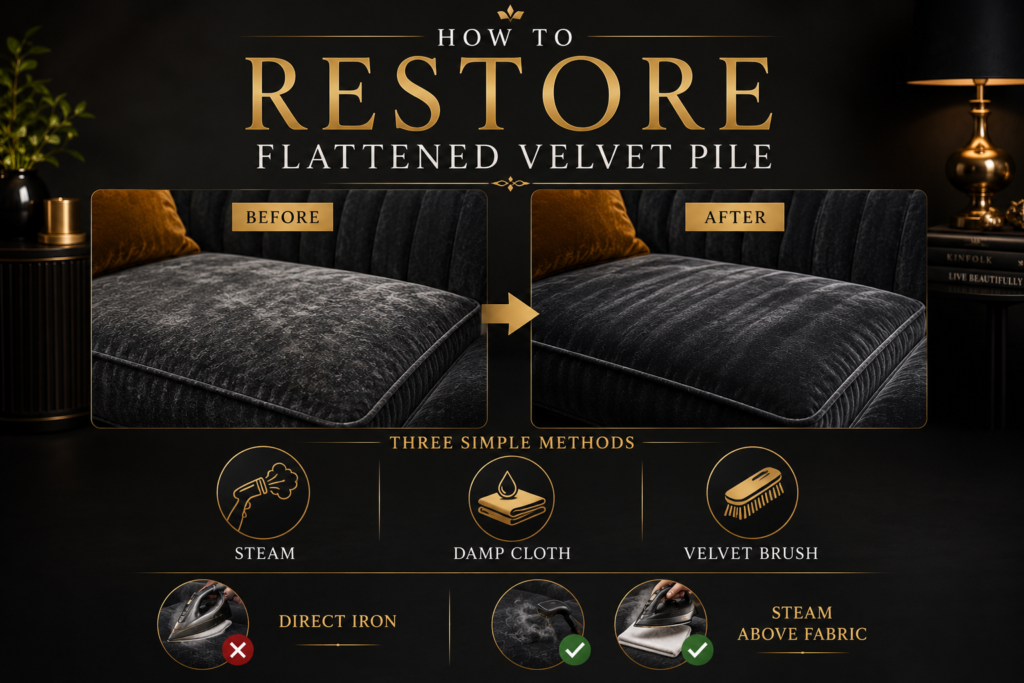
This is the question that worries most velvet sofa owners — and the solution is easier than you’d think.
Method 1 — Steam
Hold a clothes steamer or the steam setting of a garment steamer a few centimetres above the flattened area. Move it slowly across the surface — never hold it still. The steam relaxes the flattened fibres and allows them to spring back up. Follow immediately with a gentle brush in the pile direction while the fibres are still warm and pliable.
Method 2 — Damp cloth and steam iron
Place a clean damp white cloth over the flattened area. Hold a steam iron a few centimetres above the cloth — never let the iron touch the velvet directly. The combination of damp cloth and steam lifts the pile gently. Brush immediately while warm.
Method 3 — Velvet brush
For mild flattening, vigorous but gentle brushing in the pile direction with a dedicated velvet brush sometimes restores the texture without any heat or moisture at all.
💡 Pro Tip: Never iron a velvet sofa directly — even on a very low setting. Direct heat crushes the pile permanently and creates shiny, irreversible marks on the fabric surface. Always use steam at a distance or the damp cloth method. A little caution here saves a lot of heartache later.
What Never to Use on a Velvet Sofa
Some products seem harmless. They really aren’t.
| Product | Why It Damages Velvet |
|---|---|
| Baby wipes | Leave residue that attracts more dirt and can discolour the pile |
| Washing-up liquid directly | Too concentrated — causes watermarks and residue buildup |
| Bleach | Strips colour permanently from velvet |
| High suction vacuum | Pulls and crushes pile fibres irreversibly |
| Circular rubbing | Flattens pile and spreads stains — always blot only |
| Direct iron | Crushes pile permanently and creates shiny marks |
| Hairdryer on close contact | Heat flattens the pile and can cause discolouration |
| Coloured cloths | Transfer dye onto the velvet surface |
Velvet Sofa Care Schedule — Quick Reference

| Task | Frequency |
|---|---|
| Vacuum on low suction (pile direction) | Weekly |
| Brush pile with velvet brush | Weekly |
| Rotate and plump cushions | Monthly |
| Spot clean marks as they happen | Immediately |
| Bicarbonate of soda deodorise | Every 2–3 months |
| Full foam deep clean | Every 6–12 months |
| Professional velvet clean | Every 2–3 years |
For specific fabric care guidance on every velvet type in the FurniFolks collection, visit the FurniFolks furniture care guide.
Summing Up
Velvet sofas reward care in the most visible and satisfying way. A well-maintained velvet sofa looks richer, deeper, and more luxurious with every passing month. The care routine is straightforward — vacuum gently, brush regularly, act fast on spills, and deep clean twice a year.
The two rules that matter most? Never rub — always blot. And never use too much moisture — foam, not liquid. Follow those two principles and your velvet sofa stays looking as beautiful as the day you brought it home.
You chose something truly special when you chose velvet. It deserves the care — and it gives you beauty in return every single day. That’s a wonderful deal.
Frequently Asked Questions
How to Clean a Velvet Sofa? Vacuum weekly on low suction in the pile direction. Spot clean with a foam made from mild washing-up liquid and water — using a white cloth and blotting motions only. Deep clean every six months with bicarbonate of soda and the foam method. Always air dry and brush the pile back up once fully dry.
Can I use water on a velvet sofa? Yes — for most synthetic and plush velvet sofas with a W or WS cleaning code. Use minimal moisture and always in foam form rather than liquid. Too much water causes watermarks and can flatten the pile permanently. Always check your sofa’s cleaning code label first.
How do I get stains out of a velvet sofa? Act immediately. Blot — never rub. Use the foam method with a mild washing-up liquid solution on a white cloth. For grease, use bicarbonate of soda first to absorb the oil. For ink, dab carefully with rubbing alcohol. Always test on a hidden area before treating visible surfaces.
How do I restore crushed velvet pile? Use a clothes steamer held a few centimetres above the affected area — never touching the surface — and brush the pile immediately while warm. Alternatively, place a damp white cloth over the area and hold a steam iron above it without touching. Brush while warm to lift the fibres back up.
Can I vacuum my velvet sofa? Yes — but always use a soft brush attachment on low suction. Vacuum in the direction of the pile. Never use high suction directly on velvet — it crushes the pile fibres and causes irreversible flattening.
How often should I deep clean a velvet sofa? Every six to twelve months for most UK households. Homes with children or pets benefit from a deep clean every four to six months. Regular weekly vacuuming and prompt stain treatment significantly reduce how demanding the deep clean needs to be.
Now you know exactly how to keep your velvet sofa looking its best — let’s talk about a question that comes up just as often. How do you clean a sofa properly at home without expensive equipment or professional help? Read our complete guide on how to clean a sofa at home for a practical, step-by-step approach that works on every fabric type.