
Quick Answer: Thinking about how to clean a fabric sofa? Vacuum weekly with an upholstery attachment, spot clean marks with a mild washing-up liquid solution and cool water, and deep clean every six months using bicarbonate of soda and a barely damp cloth. Always check the cleaning code label first. Always blot — never rub.
Your fabric sofa works hard every single day.
It handles morning coffee. School uniform. Movie nights. Muddy paws. Takeaway spills. Lazy Sunday afternoons. It sees everything — and it still needs to look good doing it.
Here’s the thing. Keeping a fabric sofa clean doesn’t have to feel like a chore. With the right routine and the right methods, it stays fresh, smells great, and holds its colour beautifully for years.
This guide covers everything from weekly habits to deep cleaning, stain removal to fabric-specific care. By the end, you’ll have a cleaning routine that takes minutes — and makes a real difference.
Let’s go.
Step One — Check the Cleaning Code Label
This is the most important step in the whole guide. Read it before you do anything else.
Every fabric sofa carries a cleaning code. It tells you exactly which cleaning methods are safe for your specific fabric. Using the wrong method — even once — can cause permanent damage.
Find the label. It’s usually underneath a seat cushion or on the sofa frame near the base.
| Code | What It Means |
|---|---|
| W | Water-based cleaners are safe — the easiest to clean |
| S | Solvent-based cleaners only — no water |
| WS | Both water and solvent-based cleaners are safe |
| X | Vacuum only — no liquid cleaners at all |
Most fabric dark grey sofas in UK homes carry a W or WS code. This means water-based cleaning is safe to use.
If your sofa carries an S or X code — be extra careful. Water can cause permanent watermarks on S-coded fabrics. X-coded fabrics need professional cleaning for anything beyond vacuuming.
💡 Pro Tip: Before using any cleaning solution on your sofa — even one that’s safe for your fabric type — test it on a hidden area first. Try the underside of a seat cushion or the panel at the back near the floor. Wait five minutes. If the colour holds and the fabric looks fine, proceed with confidence.
Weekly Care — Quick Habits That Make a Big Difference
Weekly care prevents dirt from building up and keeps your sofa looking consistently fresh.
It takes five minutes. That’s it.
Vacuum every week
Use your vacuum’s upholstery attachment on a medium suction setting. Work across every surface — seat cushions, backrest, armrests, sides, and the gaps between cushions.
Remove the cushions and vacuum underneath them too. You’ll be amazed what collects down there.
For velvet or chenille sofas — use a low suction setting to protect the pile. Brush gently in one direction rather than back and forth.
Plump your cushions
Push the filling back to the centre after every use. Rotate cushions monthly so wear spreads evenly. This one habit alone extends the lifespan of your sofa.
Use a fabric shaver on bobbling
Fabric sofas — especially in chenille and certain weaves — can develop small bobbles or pills over time. A fabric shaver removes these in minutes and makes the sofa look almost new again. Run it over the surface every few months and enjoy the results.
💡 Pro Tip: Always vacuum before introducing any moisture to your sofa. Vacuuming removes loose dirt and debris first. If you skip this step, cleaning solutions push surface dirt deeper into the fabric — making the whole job harder and less effective.
How to Spot Clean Marks and Stains | How to Clean a Fabric Sofa
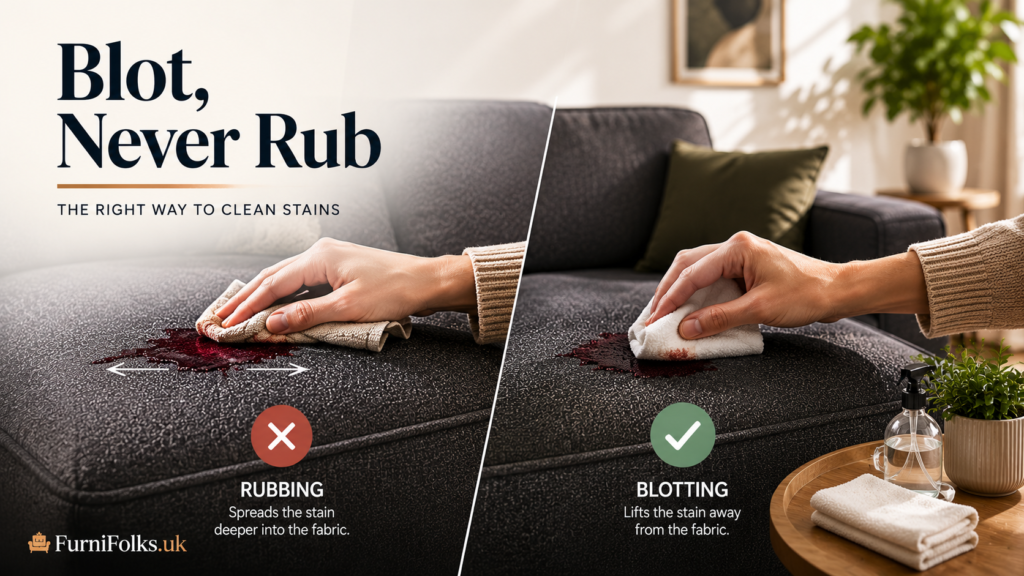
Spot cleaning is your first response to any mark or stain. Act fast, and most things come out cleanly.
The golden rule — blot, never rub.
Rubbing spreads a stain wider and pushes it deeper into the fabric, especially on the 5-seater sofa. Blotting lifts it away from the surface. This single habit prevents most stains from setting permanently.
Basic spot cleaning method (for W and WS coded sofas):
Mix one teaspoon of mild washing-up liquid into a cup of cool water. Stir gently.
Dip a clean white cloth into the solution. Wring it out so it’s barely damp — not wet.
Dab at the stain from the outside edge inward. Change to a clean section of cloth frequently. Keep blotting until the mark lifts.
Rinse by dabbing with a fresh cloth dampened with plain cool water only. This removes soap residue.
Blot dry with a clean dry cloth. Open a window and allow the area to air dry fully.
Always use white cloths. Coloured cloths can transfer dye onto light-coloured sofa fabric — creating a new problem while solving the old one.
How to Remove Common Stains From a Fabric Sofa

Tea and Coffee
Blot immediately. Remove as much liquid as possible before it soaks in.
Apply the mild washing-up liquid solution with a damp white cloth. Dab from the outside in. Rinse with plain water. Blot dry. For stubborn marks, a small amount of white vinegar diluted in water can help lift the tannin from the fabric.
Red Wine
Act fast — this one rewards speed more than any other spill.
Blot immediately with a clean dry cloth. Apply a small amount of sparkling water — the carbonation helps lift the wine from the fibres. Continue blotting. Follow with the washing-up liquid solution if any colour remains. Rinse and dry.
Grease and Food
Blot away any surface residue. Sprinkle bicarbonate of soda over the stain. Leave for twenty minutes — it absorbs the grease from the fabric. Vacuum away. Follow with the washing-up liquid solution if needed.
Mud
Let it dry completely before touching it. Trying to clean wet mud spreads it further.
Once fully dry, break up the hardened mud with a soft brush and vacuum away the debris. Treat any remaining mark with the washing-up liquid solution.
Pet Accidents
Blot away as much liquid as possible immediately. Apply a solution of equal parts white vinegar and cool water to neutralise the odour. Blot — don’t rub. Rinse with plain water. Sprinkle bicarbonate of soda over the area once dry to absorb any remaining smell. Leave overnight. Vacuum away in the morning.
Chewing Gum or Sticky Residue
Place a bag of ice cubes over the residue for a few minutes. The cold hardens it. Once hardened, it lifts away cleanly without spreading. Remove any remaining residue with a barely damp cloth.
💡 Pro Tip: Keep a small cleaning kit in your living room — a clean white cloth, a spray bottle of diluted washing-up liquid solution, and a pot of bicarbonate of soda. When spills happen — and they will — having everything within reach means you respond in seconds rather than minutes. Those seconds make the difference between a stain that lifts cleanly and one that sets permanently.
How to Deep Clean a Fabric Sofa at Home
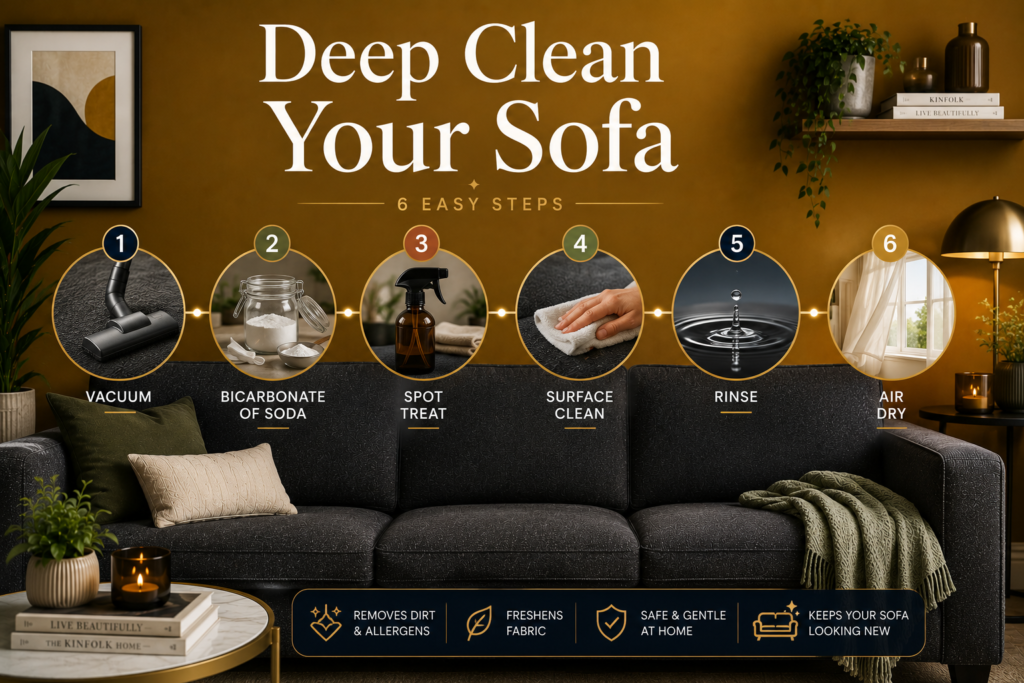
Deep cleaning every six to twelve months removes the grime that weekly vacuuming can’t reach. It deodorises. It brightens the fabric. And it makes the whole sofa feel noticeably fresher.
Here’s the full process:
What you need:
- Vacuum with upholstery attachment
- Bicarbonate of soda
- Mild washing-up liquid
- Cool water
- Several clean white cloths or microfibre cloths
- Soft brush
Step 1 — Remove everything and vacuum
Take all cushions off the sofa. Vacuum every surface — seat, back, arms, sides, and base. Use the crevice tool on all the gaps and seams. Get into every corner.
Step 2 — Bicarbonate of soda treatment
Sprinkle bicarbonate of soda across the entire sofa surface. Be generous. Leave it for at least thirty minutes — longer if there are any lingering odours.
The bicarbonate draws out moisture, neutralises smells, and lifts surface grime from the fabric simultaneously. Then vacuum every trace away.
Step 3 — Spot treat any visible marks
Go over the entire sofa in good light. Identify every mark and stain. Treat each one individually using the relevant method from the stain guide above. Allow each treated area to dry before moving to the next step.
Step 4 — Clean the whole surface
Mix a fresh washing-up liquid solution — one teaspoon per litre of cool water. Dampen a clean white cloth — barely damp. Work across the sofa in sections. Small circular motions. Change cloths when dirty.
Work from top to bottom. Don’t soak the fabric — damp is the goal, not wet.
Step 5 — Rinse
For more specific velvet fabric care, always check the cleaning code label before using any method on a crush velvet sofa.
Wipe the entire surface with a fresh cloth dampened with plain cool water only. This removes any soap residue that could attract more dirt if left behind.
Step 6 — Dry
Open all windows. Let the sofa air dry at room temperature. This usually takes two to four hours depending on how much moisture you used.
Never use a hairdryer. Never place the sofa near a radiator to speed up drying. Direct heat on damp fabric causes watermarks, shrinkage, and permanent damage.
💡 Pro Tip: Deep clean your sofa in the morning on a mild UK day when windows can stay open all day. Good airflow makes the drying process far faster and prevents any musty smell from developing in the fabric. Timing the clean well makes the whole process more satisfying — and the result noticeably better.
Fabric-Specific Cleaning Tips

Different fabrics need slightly different care. Here’s a quick guide:
| Fabric | Key Cleaning Tips |
|---|---|
| Plush Velvet | Low suction vacuum only. Brush with the pile direction. Blot spills — never rub. Use minimal moisture. |
| Chenille | Medium suction vacuum. Soft brush weekly. Responds well to mild washing-up liquid solution. Very durable. |
| Jumbo Cord | Normal upholstery vacuum. Brush along the grain. Easy to clean — one of the most forgiving fabrics available. |
| Linen | Gentle vacuum. Cool water only — hot water causes shrinkage. Dry quickly to prevent watermarks. |
| Boucle | Very gentle vacuum on low suction. Blot only — never rub or brush aggressively. Professional clean recommended for heavy staining. |
All fabric sofas in the FurniFolks sofa collection come with specific care guidance. Visit the FurniFolks furniture care guide for detailed advice on every fabric in the range.
What Never to Use on a Fabric Sofa
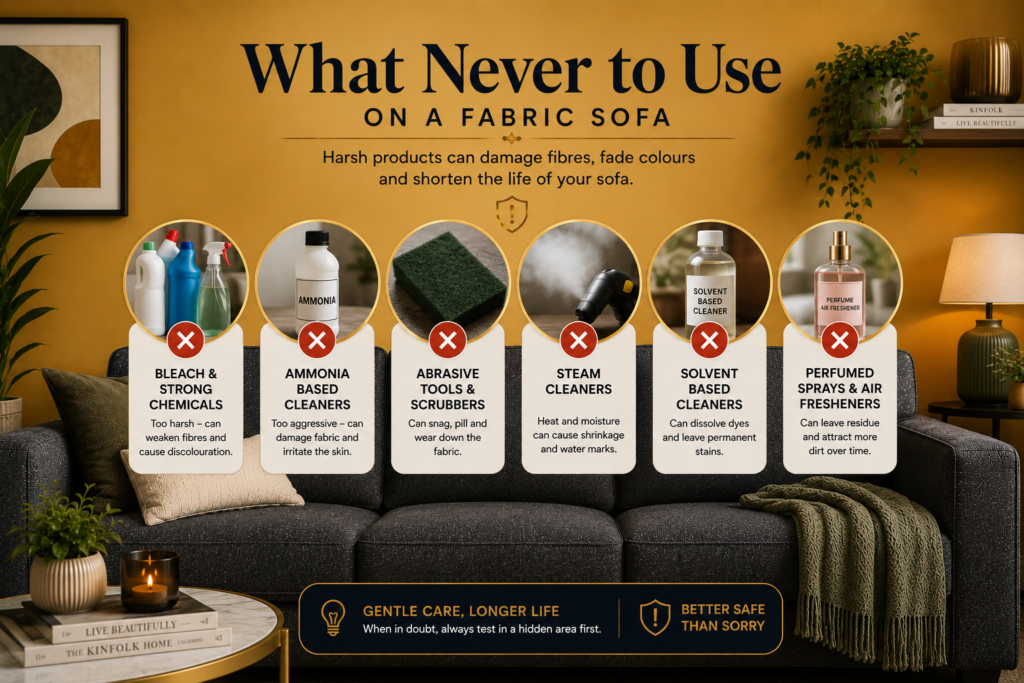
Some products feel like good ideas. They really aren’t.
Bleach — Strips colour from fabric permanently. Never use it on any sofa fabric.
Hot water — Causes shrinkage and sets certain stains rather than lifting them. Always use cool or lukewarm water.
Coloured cloths — Transfer dye onto light-coloured sofas. Always use white cloths.
Excessive moisture — Over-wetting fabric causes watermarks, encourages mould inside the sofa frame, and can damage internal components. Always damp — never wet.
Hairdryer or direct heat — Sets stains permanently and damages delicate fabrics. Air dry only.
Harsh chemical sprays — Many all-purpose household sprays are too harsh for upholstery fabrics. Always use products designed for fabric sofas specifically.
When to Call a Professional | FurniFolks For You
Home cleaning handles most situations well. But sometimes a professional is the right call.
Book a professional upholstery clean when:
- Stains won’t lift after repeated home attempts
- The sofa has developed a persistent odour that home methods can’t shift
- The fabric has developed mould or mildew
- Your sofa carries an S or X cleaning code
- You’re dealing with a delicate or high-value fabric
A professional clean every two to three years — even alongside a good home routine — removes deep-seated grime and allergens that home methods simply can’t reach. It’s a worthwhile investment in a sofa you love.
Quick Reference Cleaning Schedule
| Task | Frequency |
|---|---|
| Vacuum with upholstery attachment | Weekly |
| Plump and rotate cushions | Weekly |
| Spot clean marks as they happen | Immediately |
| Bicarbonate of soda deodorise | Monthly |
| Full deep clean | Every 6–12 months |
| Professional upholstery clean | Every 2–3 years |
Summing Up
Cleaning a fabric sofa at home is genuinely straightforward when you follow the right steps in the right order. Check the cleaning code. Vacuum first. Blot — never rub. Use cool water and a mild solution. Dry at room temperature.
Those five principles handle almost everything your sofa throws at you. Build them into your weekly routine and the deep clean sessions become easier — because the sofa never gets the chance to build up serious grime in the first place.
Your fabric sofa is the heart of your living room. It deserves a little care. And with the methods in this guide, that care takes minutes — not hours. Happy cleaning.
Frequently Asked Questions
What is the best way to clean a fabric sofa at home? Vacuum weekly with an upholstery attachment. Spot clean marks immediately with a mild washing-up liquid solution in cool water using a clean white cloth. Deep clean every six months with bicarbonate of soda and a barely damp cloth. Always check the cleaning code label before using any product.
Can I use bicarbonate of soda on a fabric sofa? Yes — bicarbonate of soda is one of the best natural cleaning agents for fabric sofas. Sprinkle it across the surface, leave for at least thirty minutes, and vacuum away. It deodorises, absorbs moisture, and lifts surface grime from the fabric.
How do I remove stains from a fabric sofa without leaving marks? Blot — never rub. Use a clean white cloth with a mild washing-up liquid solution in cool water. Work from the outside of the stain inward. Rinse with a plain damp cloth and allow to air dry fully. Using too much moisture causes watermarks — always use a barely damp cloth.
How often should I deep clean my fabric sofa? Every six to twelve months for most UK households. Homes with children, pets, or heavy daily use benefit from a deep clean every four to six months. Weekly vacuuming and prompt stain treatment reduce how much effort the deep clean requires.
Can I use a steam cleaner on a fabric sofa? Only if the care label confirms it’s safe. Some fabric sofas can handle steam cleaning — others cannot tolerate the moisture or heat. Always check the cleaning code first and test on a hidden area before cleaning a visible surface.
What should I never use on a fabric sofa? Never use bleach, hot water, coloured cloths, excessive moisture, hairdryers, or harsh chemical sprays. These cause permanent damage — stripping colour, setting stains, or shrinking the fabric. Stick to mild solutions, cool water, and white cloths for safe, effective results every time.