
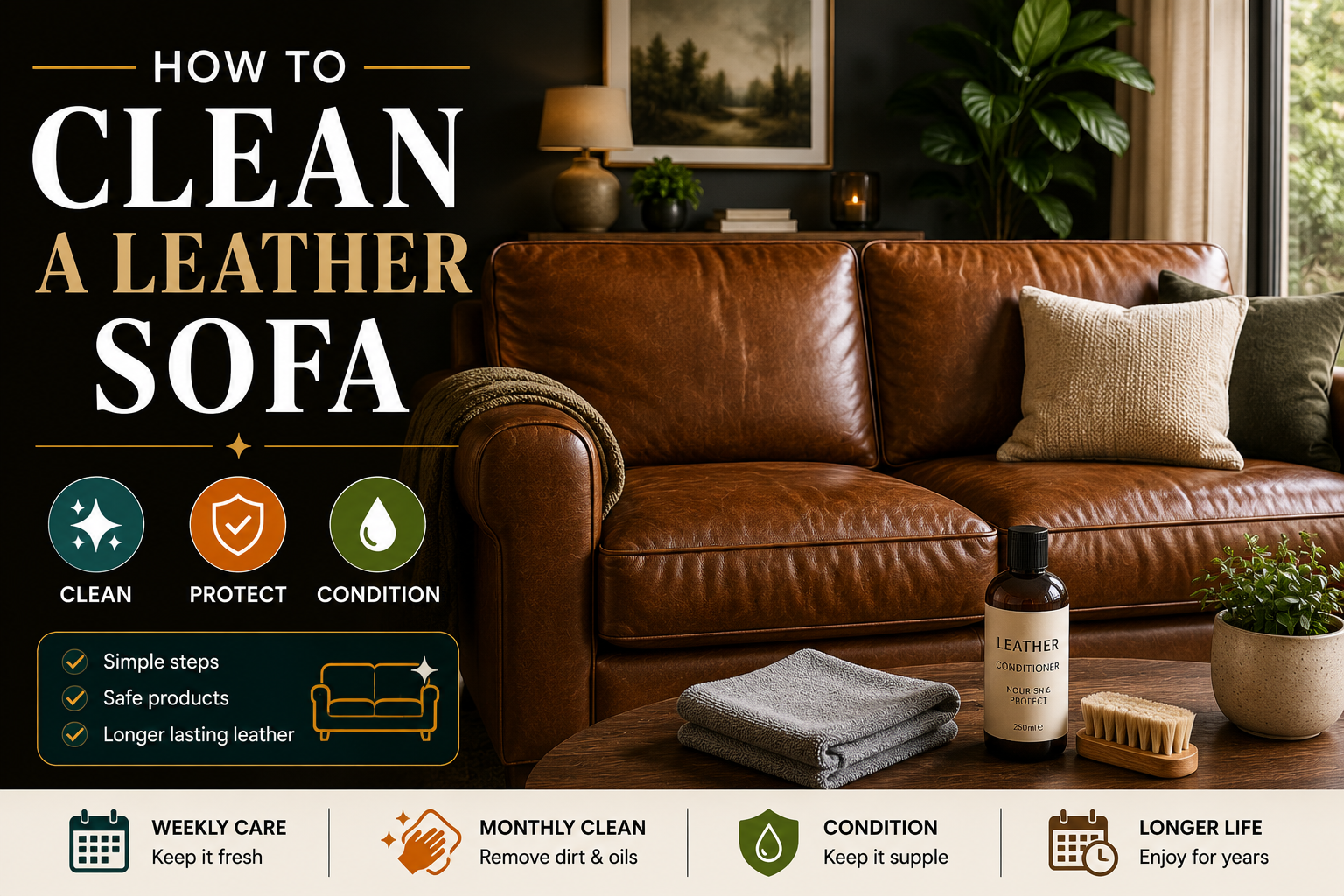
Quick Answer: Learn “How to Clean a Leather Sofa?” To clean a leather sofa, vacuum weekly with a soft brush attachment, wipe down monthly with a damp microfibre cloth and a few drops of pH-neutral soap, and condition every six to twelve months. Always blot spills immediately. Never rub. Never use baby wipes, bleach, or washing-up liquid on leather
A leather sofa is one of the best investments you can make for your living room.
It looks stunning like dark grey sofas. It ages beautifully. It lasts for decades when you care for it properly. Some leather sofas genuinely outlive the rooms they sit in.
But here’s the thing. Leather needs care. Not a lot of care — but the right care. Use the wrong product once and you can cause damage that’s very hard to reverse.
The good news? Cleaning a leather sofa at home is easy when you know what you’re doing. This guide covers everything — weekly habits, monthly cleaning, stain removal, conditioning, and the products to avoid completely.
Let’s get into it.
Know Your Leather Type First

Not all leather sofas clean the same way.
Before you reach for any product, identify the type of leather your sofa uses. This one step prevents a lot of potential damage.
Pigmented leather — The most common type in UK homes. A protective coating sits on top of the leather surface. More durable. More resistant to stains. Easiest to clean. Most high-street UK sofas use pigmented leather.
Semi-aniline leather — A thin protective coating over a more natural leather surface. Softer and more luxurious than pigmented. Slightly more delicate. Requires a little more care.
Aniline leather — The most natural and softest leather available. No protective coating at all. Beautiful to look at and touch. But it stains easily and needs the gentlest cleaning methods of all.
How to identify yours — Check the care label on your sofa. It’s usually found underneath a cushion or on the sofa frame. If you’re unsure, contact the retailer. Knowing your leather type makes every cleaning decision straightforward.
💡 Pro Tip: If you can’t find a care label, do a quick water drop test. Place a single drop of water on a hidden area of the leather. If it absorbs into the surface within a minute, you likely have aniline or semi-aniline leather. If it beads on the surface, you have pigmented leather with a protective coating. This tells you exactly how careful you need to be.
What You Need Before You Start
Great news — you don’t need expensive equipment.
Most of what you need is already in your home.
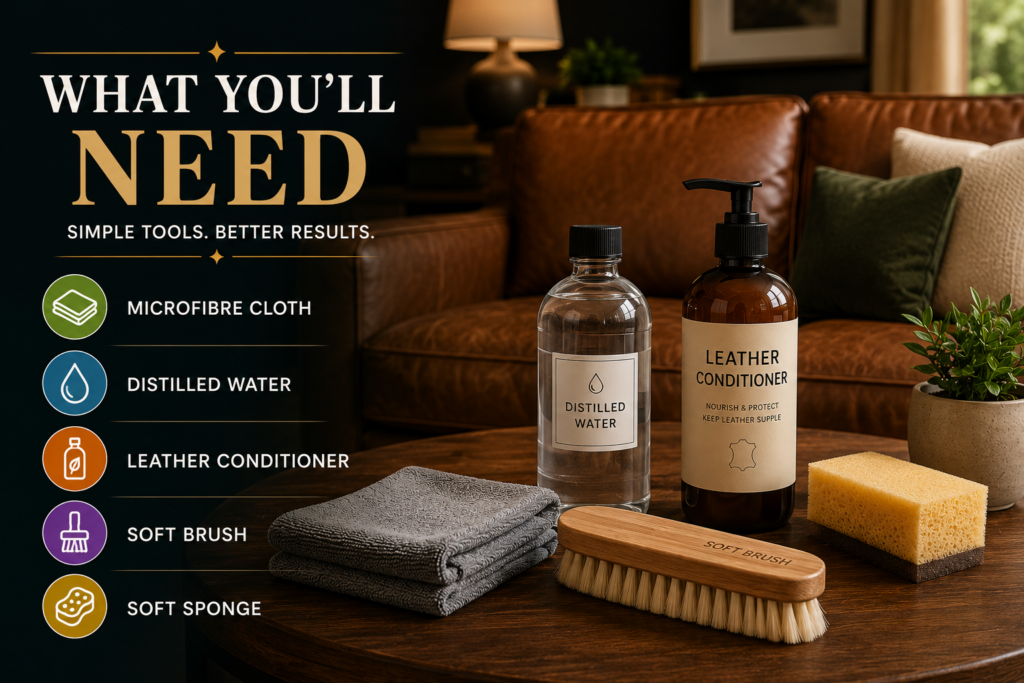
- Vacuum cleaner with a soft brush attachment
- Microfibre cloths (at least three or four clean ones)
- Distilled water — UK tap water can leave mineral deposits on leather
- Mild pH-neutral soap or a dedicated leather cleaner
- Leather conditioner
- Soft sponge
That’s it. Simple, affordable, and effective.
Weekly Care — Two Minutes That Make a Huge Difference
Weekly care is the foundation of leather sofa maintenance.
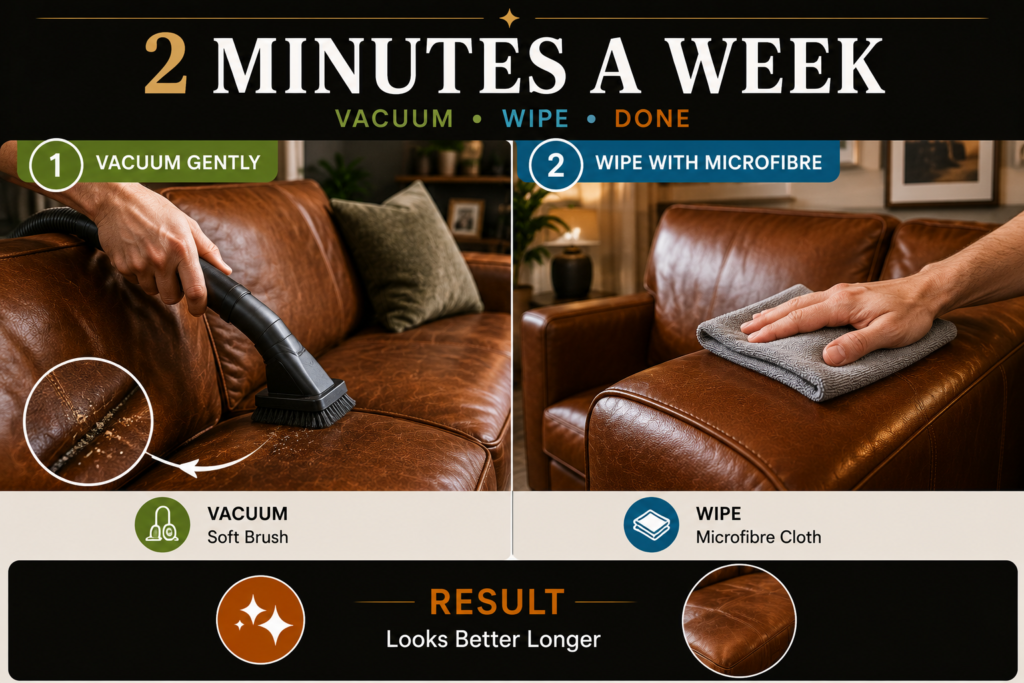
It takes two minutes. It prevents dirt from building up in the grain and seams. And it keeps your sofa looking fresh with almost no effort.
Step 1 — Vacuum gently
Use the soft brush attachment on your vacuum. Set the suction to low — never use high suction directly on leather.
Work across all surfaces — seat cushions, backrest, armrests, and sides. Pay extra attention to the seams and creases where crumbs, dust, and pet hair collect.
For Chesterfield-style sofas with deep button detailing — use a soft-bristled toothbrush to gently loosen any dirt trapped around the buttons. Then vacuum it away.
Step 2 — Wipe with a dry microfibre cloth
After vacuuming, wipe the entire surface with a clean dry microfibre cloth. This picks up any remaining surface dust and keeps the leather looking polished.
That’s your weekly routine. Two steps. Two minutes. Done.
💡 Pro Tip: Keep a clean microfibre cloth folded on or near your sofa. When you sit down each evening, give the armrests a quick wipe. This tiny habit prevents skin oils and everyday grime from building up on the most-touched surfaces — and it adds up to a sofa that looks noticeably better over time.
Monthly Cleaning — The Proper Wipe-Down
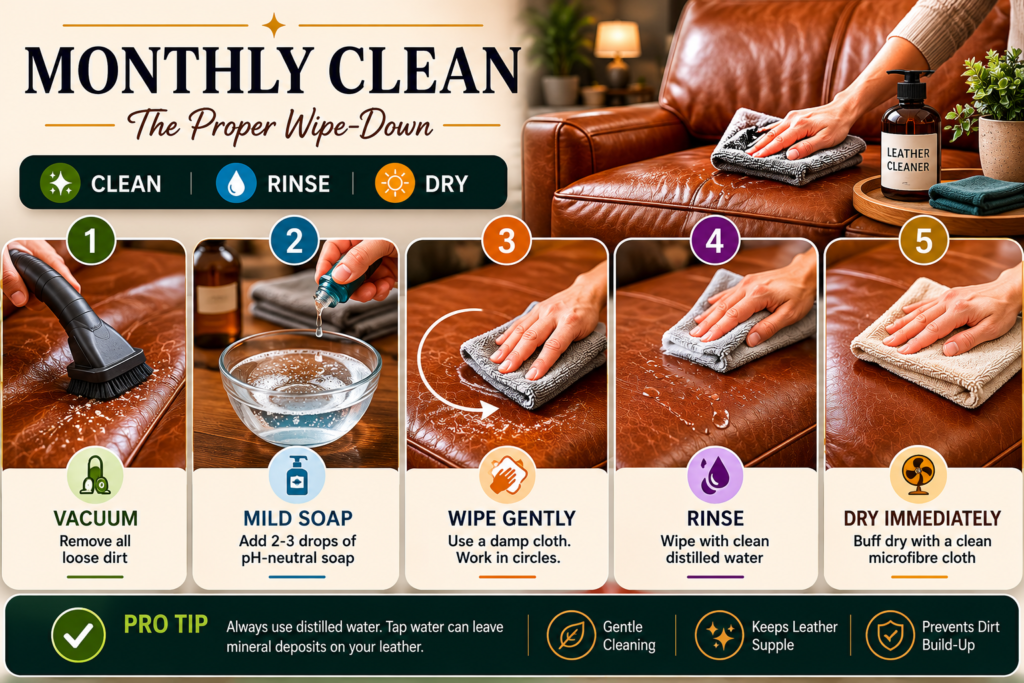
Once a month, give your leather sofa a proper clean.
This removes the surface grime and natural oils that build up from everyday use — keeping the leather supple and preventing it from looking dull.
If you’re comparing care routines for different materials, velvet upholstery care follows different steps from leather and should be handled with its own gentle cleaning approach.
Step-by-step monthly clean:
1. Vacuum first — Always start with the vacuum. Remove all loose debris before introducing any moisture.
2. Prepare your cleaning solution — Add two or three drops of pH-neutral soap to a bowl of distilled water. Mix gently. The solution should be barely soapy — not frothy.
3. Dampen your cloth — Dip a clean microfibre cloth into the solution. Wring it out firmly. The cloth should feel barely damp — not wet. Excess moisture on leather causes damage.
4. Wipe in circular motions — Work across the sofa in sections. Use gentle circular motions. Start from the top and work downward. Change to a fresh cloth if the one you’re using becomes visibly dirty.
5. Rinse with plain water — Dampen a fresh cloth with plain distilled water only. Wipe over the cleaned areas to remove any soap residue.
6. Dry immediately — Use a clean dry microfibre cloth to buff the surface dry. Never leave leather to air dry — and never use a hairdryer or place the sofa near a radiator to speed things up. Dry naturally at room temperature only.
How to Condition a Leather Sofa
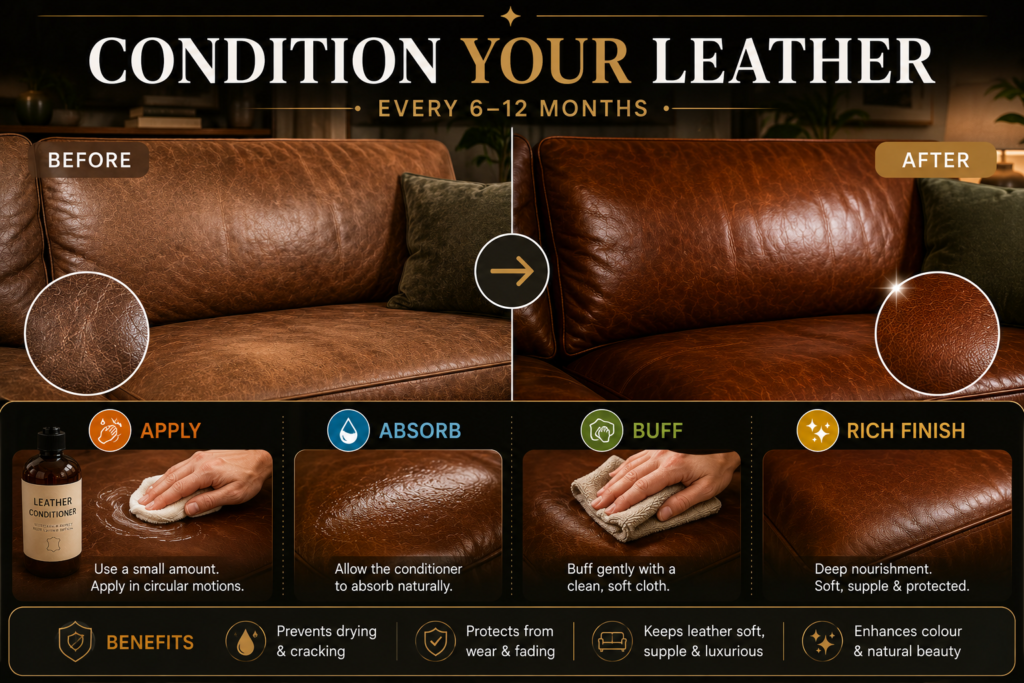
This is the step most people skip — and it’s one of the most important.
Leather is a natural material. It loses moisture over time. Without conditioning, it dries out, becomes stiff, and eventually cracks. A good leather conditioner restores moisture, keeps the leather supple, and extends the life of your sofa.
Condition your leather sofa every six to twelve months. More often, the sofa sits near a heat source or in a sunny room.
How to condition:
Apply a small amount of leather conditioner to a clean, soft cloth. Work it into the leather using gentle circular motions. Cover the entire surface — don’t miss the backs and sides. Allow it to absorb for the time stated on the product instructions. Then buff gently with a clean dry cloth to remove any excess.
Your sofa will look noticeably richer and feel noticeably softer after conditioning. It’s one of those moments that reminds you why you chose leather in the first place.
💡 Pro Tip: Always apply conditioner after cleaning — never before. Cleaning removes surface dirt and oils, which allows the conditioner to penetrate the leather properly. Conditioning over a dirty surface just seals the grime in rather than nourishing the leather beneath it.
How to Remove Common Stains From a Leather Sofa
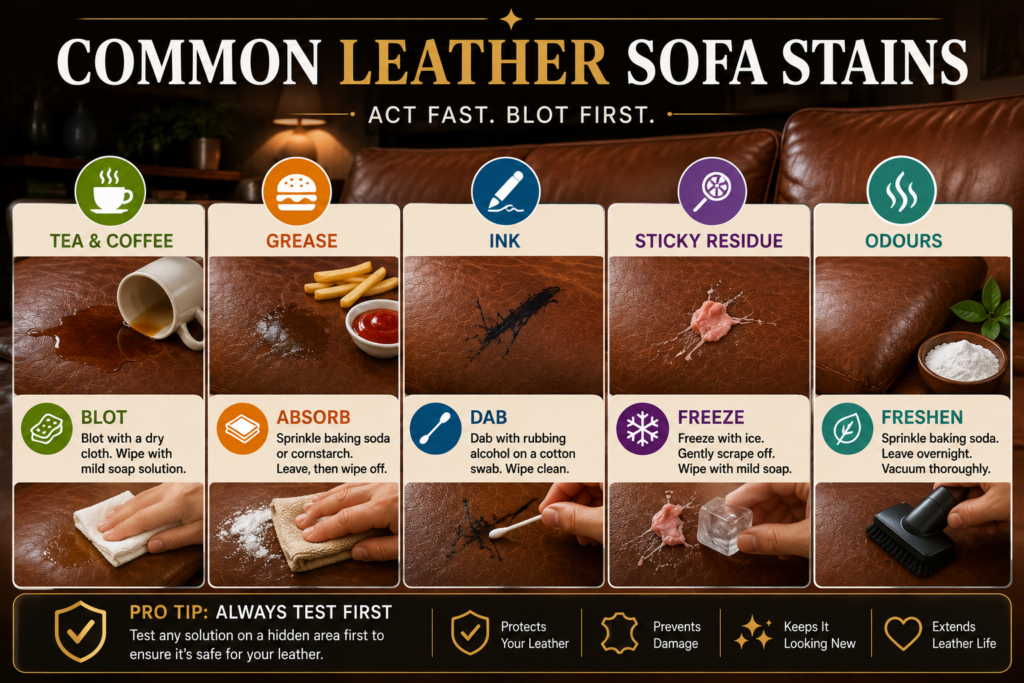
Act fast with any spill. Speed is the single most important factor in preventing a stain from setting permanently.
Liquid Spills — Tea, Coffee, Juice, Water
Blot immediately with a clean dry cloth. Press firmly and lift — never rub. Continue blotting until you’ve absorbed as much liquid as possible. Then wipe gently with a barely damp cloth. Dry immediately.
Most liquid spills on pigmented leather clean up with no trace at all when addressed within seconds.
Grease and Food Stains
Blot away any surface residue first. Sprinkle a small amount of cornstarch or talcum powder over the greasy area. Leave for twenty to thirty minutes — the powder absorbs the oil from the surface. Brush away gently and vacuum. Follow with your normal damp cloth clean if any mark remains.
Ink and Biro
Act immediately — fresh ink is far easier to remove than dried ink.
Dip a cotton swab in rubbing alcohol. Dab very gently at the ink mark — never rub. Work from the outside of the mark inward. This can take several careful attempts. Always test the rubbing alcohol on a hidden area first.
For dried or stubborn ink stains, a specialist leather ink remover is the safest option.
Sticky Residue — Chewing Gum, Stickers
Place a bag of ice cubes over the residue for a few minutes to harden it. Once hardened, it lifts away cleanly without smearing. Remove any remaining residue with a barely damp cloth.
Odours
Sprinkle bicarbonate of soda over the affected area. Leave for several hours or overnight. Vacuum away thoroughly. Follow with your normal monthly clean to freshen the entire surface.
💡 Pro Tip: For any stain you’re uncertain about — test your cleaning method on the most hidden area of the sofa first. The underside of a seat cushion or the back panel near the floor works perfectly. If the test area looks fine after five minutes, proceed on the visible area with confidence.
What Never to Use on a Leather Sofa
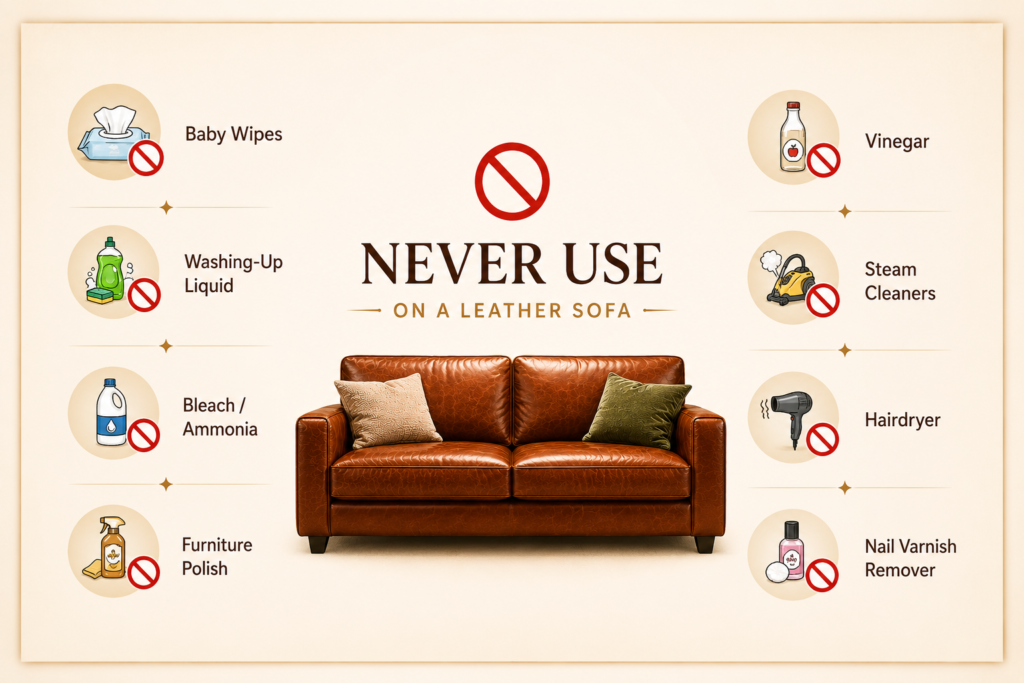
This section might be the most important one in the guide.
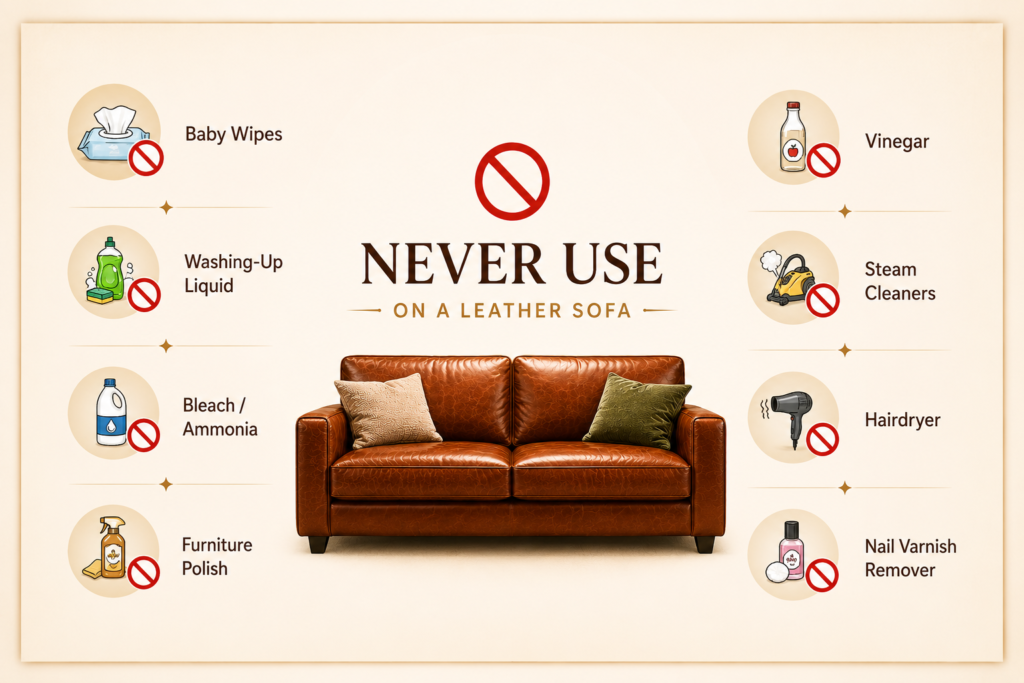
These products damage leather — sometimes irreversibly. Keep them away from your sofa completely.
| Product | Why It Damages Leather |
|---|---|
| Baby wipes | Contain chemicals that strip the protective coating |
| Washing-up liquid | Degreasers dry out and crack the leather surface |
| Bleach or ammonia cleaners | Strip colour and destroy the leather permanently |
| Furniture polish | Builds up residue and clogs the leather grain |
| Vinegar | Acidic — can damage the protective finish on many leathers |
| Steam cleaners | Heat and moisture damage natural leather oils |
| Hairdryer | Direct heat causes cracking and shrinkage |
| Nail varnish remover | Dissolves the leather surface finish instantly |
Some of these feel like obvious choices. Others — baby wipes especially — seem harmless but cause real damage over time. Now you know. Keep the list handy.
Long-Term Leather Sofa Care Tips
These habits keep your leather sofa looking beautiful for years.
Keep it away from direct sunlight — UV rays fade leather colour and dry it out. Position your sofa, especially a 5 seater sofa of 3 seater sofa, away from windows that receive strong afternoon sun. Use blinds or curtains during peak sunlight hours if needed.
Keep it away from heat sources — Radiators and fireplaces dry out leather rapidly. Leave at least 30cm of clear space between your sofa and any heat source.
Use a dehumidifier in damp homes — UK homes can suffer from seasonal damp — especially in older properties. Humidity encourages mould growth on leather. A dehumidifier in damp rooms makes a real difference.
Protect from sharp objects — Pet claws, belt buckles, keys, and sharp toys are the most common causes of surface scratches on leather sofas. Small surface scratches on pigmented leather can often be buffed out with a leather conditioner — but prevention is always better.
Book a professional clean every few years — A professional leather cleaning service every three to five years removes deep-seated grime and restores the surface in ways home cleaning cannot fully match. Worth every penny for a sofa you love.
💡 Pro Tip: If your leather sofa develops small surface scratches over time, try this before calling in a professional. Rub the scratch very gently with your clean fingertip in a circular motion. The natural warmth and oils from your skin can sometimes buff out light surface marks on pigmented leather. It sounds almost too simple — but it genuinely works on minor scuffs.
Leather Sofa Cleaning Schedule — Quick Reference
| Task | Frequency |
|---|---|
| Vacuum with soft brush | Weekly |
| Dry microfibre wipe | Weekly |
| Damp cloth clean with pH-neutral soap | Monthly |
| Full conditioning treatment | Every 6–12 months |
| Professional clean | Every 3–5 years |
Summing Up
A leather sofa rewards good care in a way few other pieces of furniture do. Look after it properly and it genuinely gets better with age — developing a beautiful patina that tells the story of the home it lives in.
The routine is simple. Vacuum weekly. Wipe monthly. Condition twice a year. Act fast on spills. Avoid the products on the no-go list. That’s really all it takes.
Give your leather sofa the care it deserves and it will give you years — possibly decades — of comfort, beauty, and effortless style in return. That feels like a pretty good deal to us.
Frequently Asked Questions
What is the best way to clean a leather sofa at home? Vacuum weekly with a soft brush attachment. Clean monthly with a barely damp microfibre cloth and a few drops of pH-neutral soap in distilled water. Condition every six to twelve months with a dedicated leather conditioner. Always blot spills immediately — never rub.
Can I use baby wipes to clean a leather sofa? No. Baby wipes contain chemicals and oils that strip the protective coating from leather over time. They cause a sticky residue and eventually lead to cracking. Use a clean damp microfibre cloth with pH-neutral soap instead.
How do I get stains out of a leather sofa? Act immediately. Blot liquid spills with a dry cloth — never rub. For grease, use cornstarch to absorb the oil before wiping. For ink, dab carefully with rubbing alcohol on a cotton swab. For stubborn stains, use a specialist leather stain remover and always test on a hidden area first.
How often should I condition my leather sofa? Every six to twelve months for most UK homes. Condition more often — every three to four months — if the sofa sits near a radiator, in direct sunlight, or in a room that gets very dry in winter. Regular conditioning prevents cracking and keeps the leather supple.
Can I use vinegar to clean a leather sofa? It’s best avoided. Vinegar is acidic and can damage the protective finish on many leather types — particularly semi-aniline and aniline leather. A mild pH-neutral soap solution in distilled water is a much safer and equally effective alternative.
How long does a leather sofa last with proper care? A well-made leather sofa with a kiln-dried hardwood frame, cared for properly, can last fifteen to twenty years or more. Some high-quality leather sofas last a lifetime. Regular cleaning and conditioning are the two habits that make the biggest difference to longevity.