Q: What is a Chesterfield Sofa?
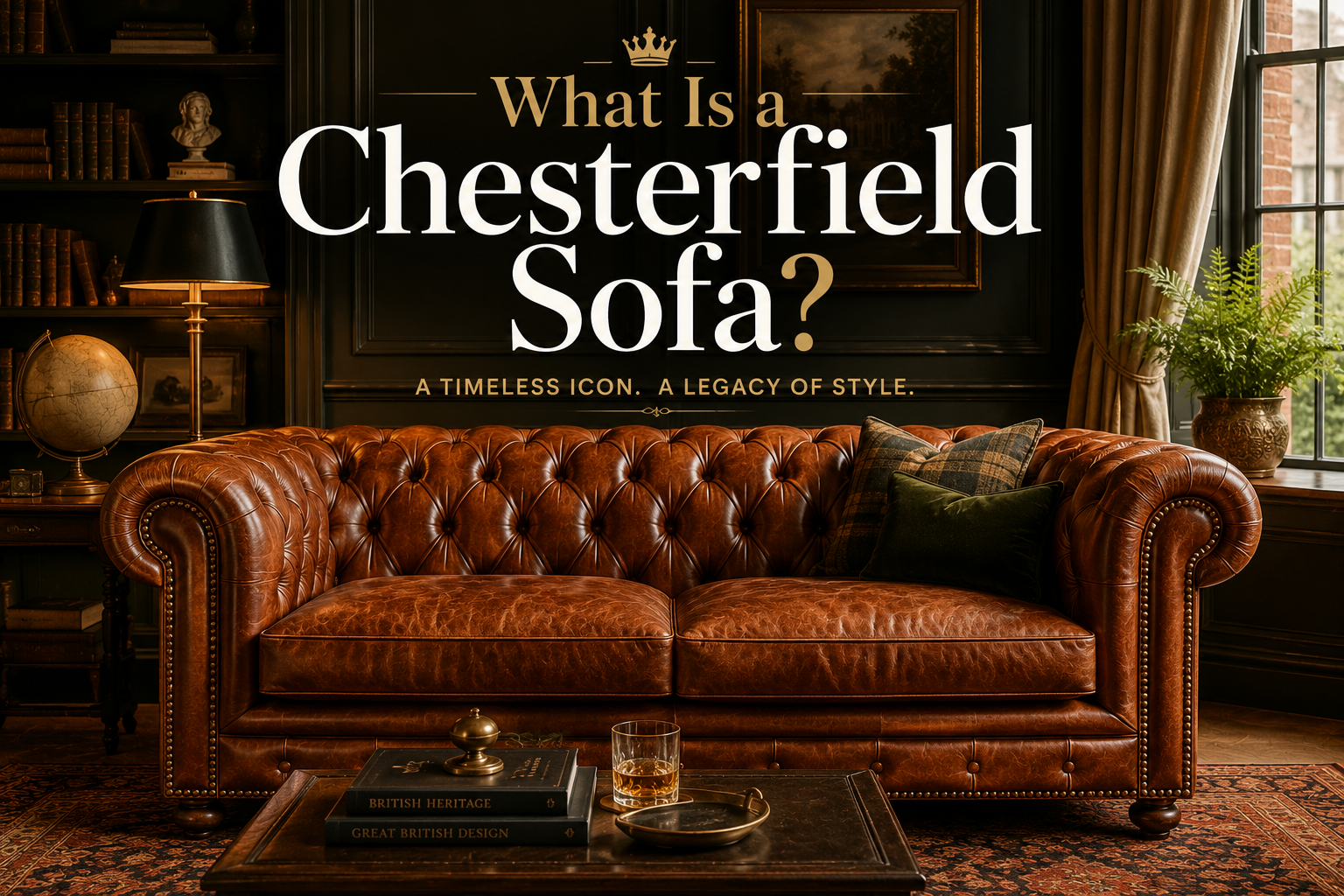
Quick Answer: A Chesterfield sofa is a classic British design featuring deep button tufting, rolled arms set at the same height as the back, and traditionally leather upholstery. It originated in 18th-century England and remains one of the most recognisable sofa styles in the world today.
You’ve seen one before, even if you didn’t know the name.
That deep, diamond-quilted leather. Those rolled arms standing as tall as the back. The kind of sofa that looks equally at home in a gentleman’s club, a law office, or a stylish modern UK living room.
That’s a Chesterfield. And it’s been turning heads for almost 300 years.
This guide walks you through exactly what makes a Chesterfield a Chesterfield — its history, its defining features, and why it remains such a popular choice in UK homes today.
Where the Chesterfield Sofa Came From

The story goes back to 18th-century England.
Most furniture historians trace the design to Philip Stanhope, the 4th Earl of Chesterfield. He wanted a sofa that let a gentleman sit upright comfortably — without crushing the tails of his coat. Low arms on standard sofas of the time made that nearly impossible.
The solution was elegant. High, rolled arms set level with the back gave gentlemen somewhere proper to rest, while keeping their coats neat. Deep button tufting kept the leather smooth and prevented it from sagging or creasing under regular use.
It worked. And it caught on fast among the upper classes.
The design truly came into its own during the Victorian era, when deep buttoning and coil spring suspension were added to improve comfort. From there, the Chesterfield became a fixture in gentlemen’s clubs across London — the kind of sofa wealthy men relaxed on while discussing business over a drink.
💡 Pro Tip: Interestingly, in Canada, the word “chesterfield” became a general term for any sofa — a usage that lasted well into the 20th century. So if you ever hear someone from Canada casually refer to “the chesterfield” in their living room, they might just mean any sofa at all.
What Actually Makes a Sofa a Chesterfield?
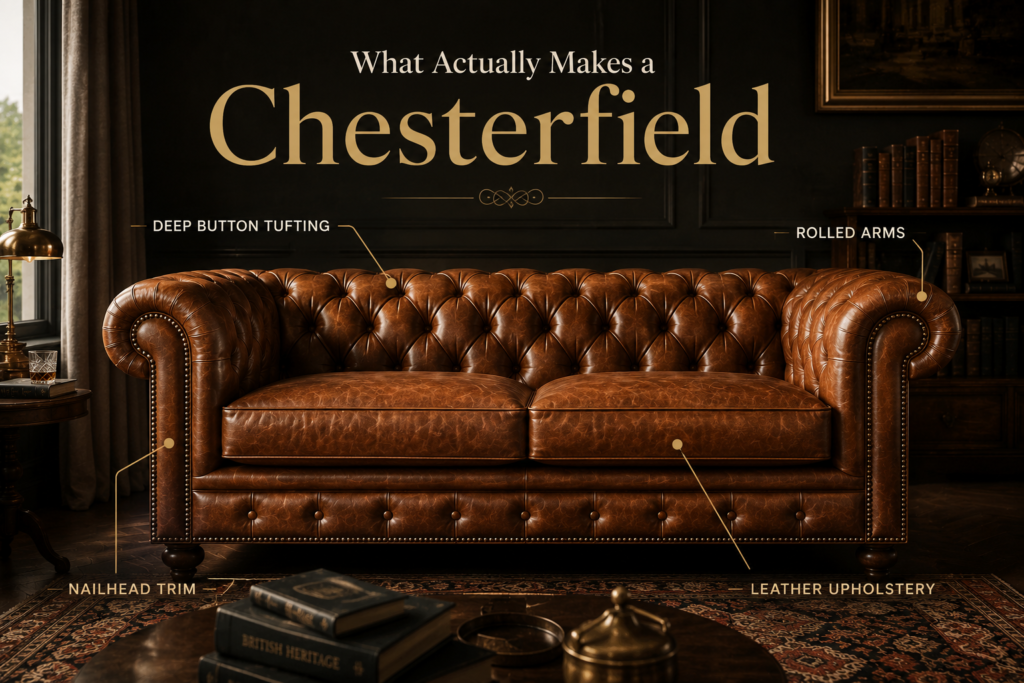
Not every tufted leather sofa earns the name. A genuine Chesterfield needs several specific features together.
Deep button tufting — A quilted, diamond-shaped pattern created by pulling the fabric deep into the frame and securing it with buttons. This appears across both the back and the arms — not just the seat.
Rolled arms at back height — The arms curve outward and sit at exactly the same height as the back. This creates one smooth, continuous line across the whole sofa — the single most recognisable feature of the design.
Low, substantial profile — Chesterfields sit relatively close to the ground, with deep seats and a solid, grounded presence in any room.
Traditional leather upholstery — Classic Chesterfields are leather, though modern versions now come in velvet and fabric too. Leather remains the most authentic and traditional choice.
Nailhead trim (on many designs) — Small studs, often brass or antiqued metal, lining the edges of the upholstery. This adds definition and a clear sense of old-world craftsmanship.
| Feature | What to Look For |
|---|---|
| Tufting | Deep, diamond-shaped buttoning across back and arms |
| Arms | Rolled, same height as the back |
| Profile | Low to the ground, deep seat |
| Upholstery | Leather (traditional) or velvet/fabric (modern) |
| Trim | Nailhead detailing on many designs |
Why the Chesterfield Became a Symbol of Status
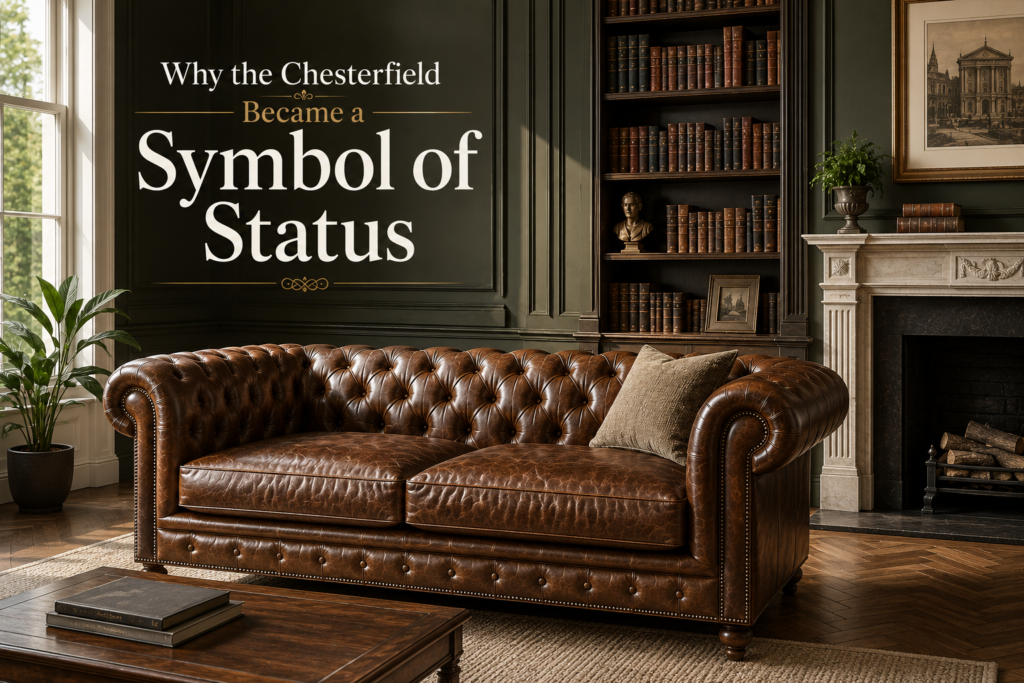
By the Victorian era, the Chesterfield wasn’t just a comfortable place to sit. It was a statement.
Owning one signalled wealth, taste, and permanence. The leather suggested durability and refinement. The scale and craftsmanship spoke of serious investment. It became a regular fixture in the libraries, drawing rooms, and parlours of Britain’s wealthiest households.
It also found a home in London’s most exclusive gentlemen’s clubs — places where the city’s wealthiest men gathered to talk business, drink, and unwind. Some of those original clubs still have Chesterfields in use today, a genuine testament to how well-built these sofas really are.
There’s even a famous psychological connection. The image of a patient reclining on a tufted couch during therapy comes from this era too — Sigmund Freud used a similarly styled sofa during his sessions, believing patients spoke more openly when genuinely comfortable.
While traditional Chesterfields are usually leather, some modern versions use velvet Chesterfield upholstery for a softer look and feel.
How the Chesterfield Has Evolved
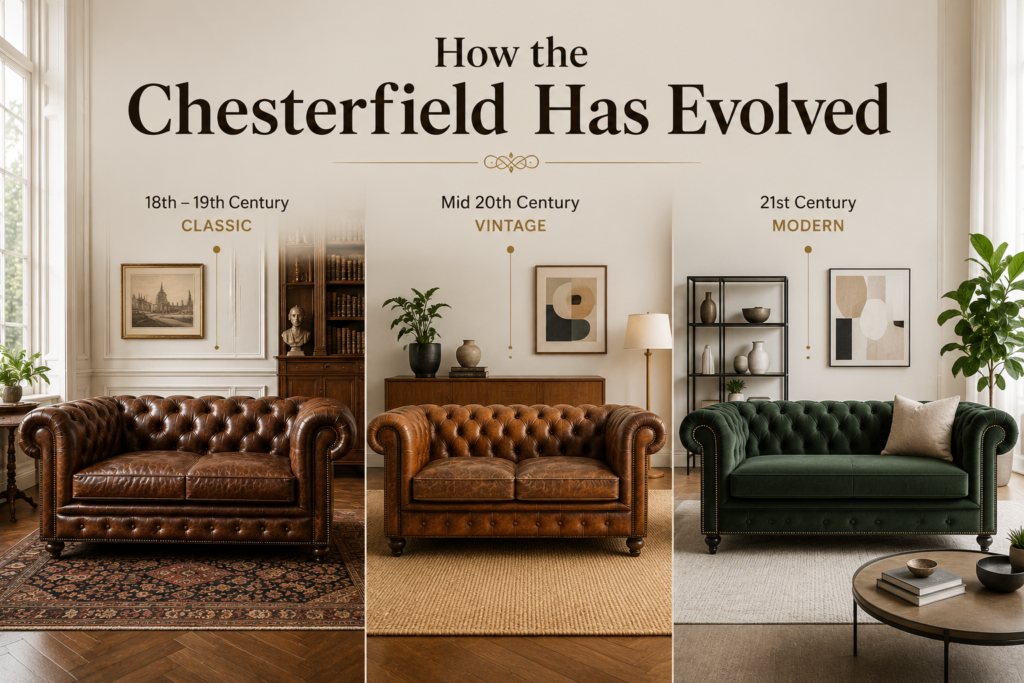
The Chesterfield hasn’t stood still for 300 years. It’s adapted constantly while keeping its core identity intact.
The Victorian era added the deep buttoning and spring suspension we now consider essential to the design.
The early 20th century saw the Chesterfield spread across the British Empire — appearing in colonial offices, officers’ quarters, and government buildings worldwide.
The mid-20th century brought a brief shift toward cleaner, more modernist furniture. The Chesterfield adapted by experimenting with new colours and slightly updated proportions, rather than disappearing.
The 1970s and 80s saw a genuine revival, especially in vintage and industrial-style interiors. It also became something of a cinematic favourite — instantly signalling gravitas in law offices and detective dramas on screen.
Like sliding wardrobes, a Chesterfield sofa is defined by a distinctive design that combines practical function with a recognisable style.
If you need a larger option for a family room, a 5 seater sofa can still suit the Chesterfield style while keeping the same classic shape.
If you are comparing styles for a dark grey sofa, a Chesterfield offers a distinctive look with its deep button tufting and rolled arms.
Today, the Chesterfield sits comfortably in both traditional and contemporary UK homes. Modern fabric and velvet versions have opened the design up to a much wider range of interior styles than the classic oxblood leather version ever could alone.
💡 Pro Tip: A genuine antique or well-made modern leather Chesterfield develops a beautiful patina over years of use — small variations in colour and texture that tell the story of the sofa’s life rather than signs of wear. If you choose leather, look forward to this. It’s part of the charm, not something to avoid.
Chesterfield vs Other Tufted Sofas — What’s the Difference?
People often confuse a Chesterfield with other deep-buttoned or rolled-arm sofas. Here’s how to tell them apart.
A genuine Chesterfield always has arms the same height as the back. Many other tufted sofa styles have lower arms, which immediately rules out the Chesterfield name — regardless of how similar the buttoning looks.
The tufting on a true Chesterfield extends across both the back and the arms as one continuous pattern. Sofas with tufting only on the back, or with a different pattern on the arms, are inspired by the style rather than a genuine Chesterfield.
Chesterfield Sofas in Modern UK Homes
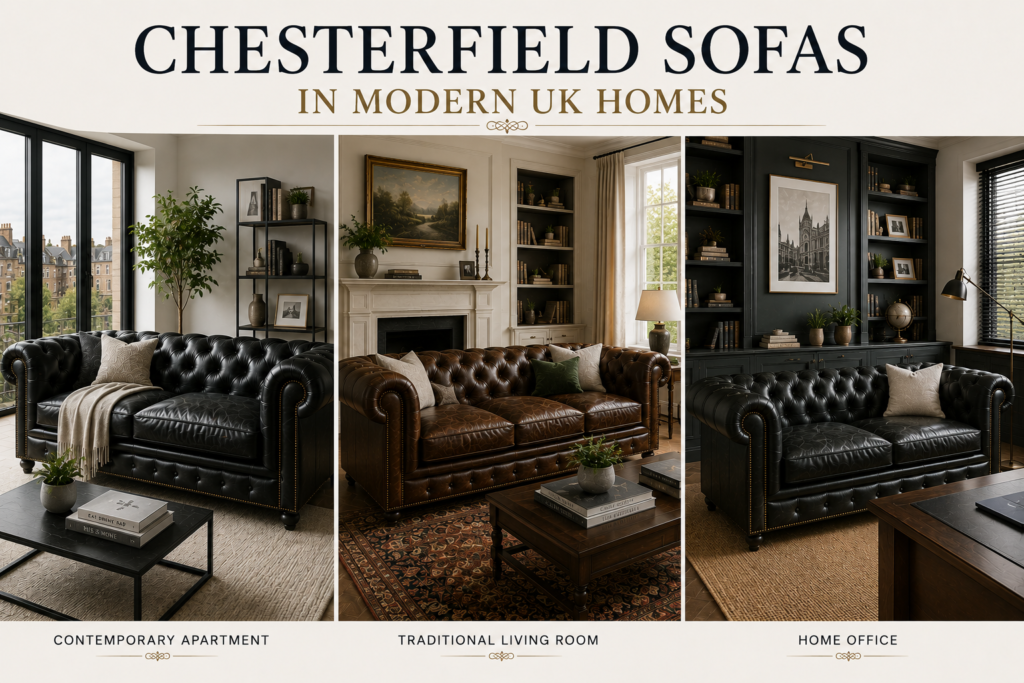
The Chesterfield works in far more settings than most people expect.
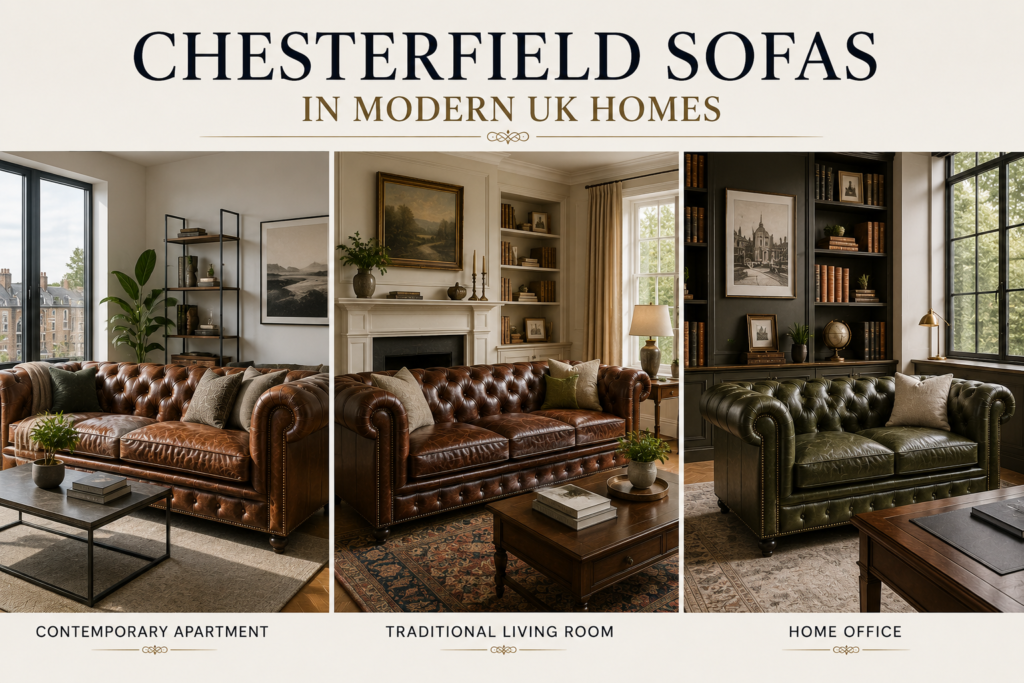
Traditional living rooms — A classic leather Chesterfield in deep brown or oxblood feels completely at home alongside rich wood furniture, traditional rugs, and warm, layered lighting.
Contemporary interiors — A Chesterfield in a soft grey or deep navy velvet brings the same iconic silhouette into a thoroughly modern room, working beautifully alongside clean lines and minimalist styling.
Period properties — In a Victorian or Georgian UK home, a Chesterfield feels like a natural, authentic fit — as if the house and the sofa were always meant to go together.
Studies and home offices — The Chesterfield’s history in libraries and gentlemen’s clubs makes it a natural choice for a home office or reading room, lending genuine character to the space.
The defining feature — that continuous rolled-arm silhouette — works as a striking centrepiece in almost any room style, as long as you balance the rest of the space around it.
Caring for a Chesterfield Sofa
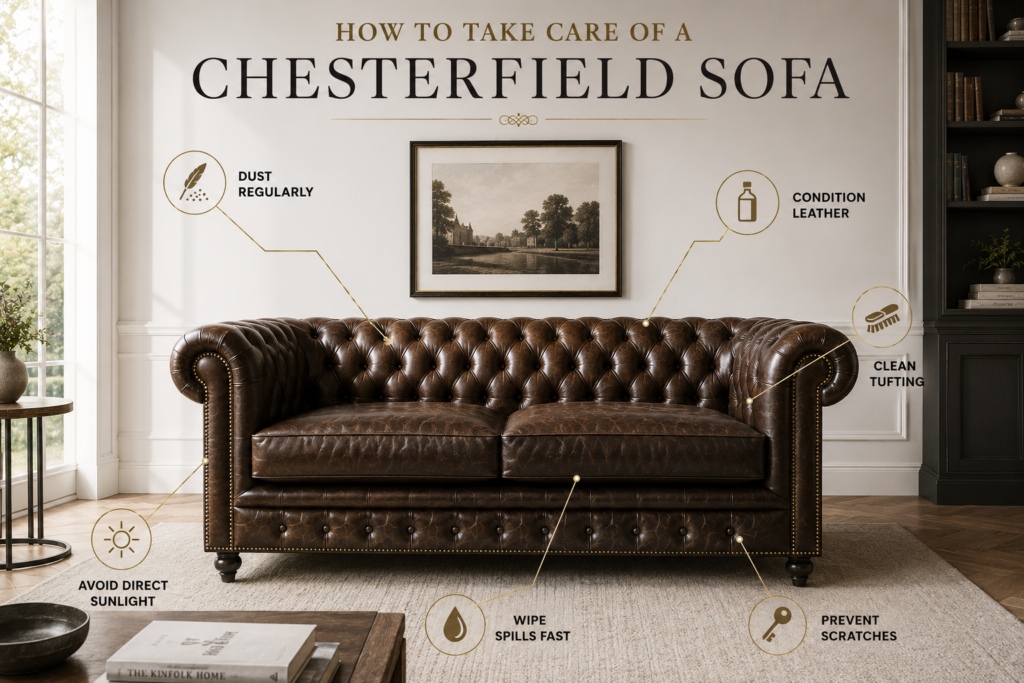
Whether leather or fabric, a Chesterfield’s deep tufting needs a little specific attention.
Dust and debris can settle into the buttoned creases over time. A soft brush — even an old, clean toothbrush — works well to gently loosen any dirt trapped around the buttons before vacuuming it away.
For leather Chesterfields, regular conditioning keeps the material supple and helps develop that beautiful patina evenly across the whole sofa, rather than in patches.
For fabric or velvet versions, follow the same care principles as any other sofa in that fabric — checking the cleaning code label and vacuuming gently around the tufted areas.
Summing Up
The Chesterfield has lasted almost three centuries for a reason. It solved a real problem when it was created, and it’s never stopped looking remarkable while doing it.
Deep button tufting. Rolled arms level with the back. A low, substantial presence in any room. Those defining features haven’t changed since the 18th century — and that’s exactly why the Chesterfield still feels timeless rather than dated.
Whether you choose a traditional leather version or a modern fabric take on the design, you’re bringing a genuine piece of British furniture history into your living room. That’s not something many other sofa styles can claim.
Frequently Asked Questions
What makes a sofa a Chesterfield? A genuine Chesterfield has deep button tufting across both the back and arms, rolled arms set at the same height as the back, and a low, substantial profile. Traditionally upholstered in leather, though modern versions also come in velvet and fabric.
Where does the name Chesterfield come from? The name comes from Philip Stanhope, the 4th Earl of Chesterfield, who is widely credited with commissioning the first version of this sofa design in 18th-century England.
Are Chesterfield sofas always leather? Traditionally, yes. Leather remains the most authentic and classic choice. Modern Chesterfield sofas are also available in velvet and fabric, offering the same iconic silhouette with a softer, more contemporary feel.
Do Chesterfield sofas suit modern living rooms? Yes. A Chesterfield in velvet or fabric, in colours like grey or navy, fits beautifully into contemporary interiors. The classic leather version suits more traditional rooms, but the style genuinely works across both.
What is the difference between a Chesterfield and a regular tufted sofa? A true Chesterfield has arms the same height as the back, with tufting continuing across both the back and arms as one unbroken pattern. Many other tufted sofas have lower arms or tufting only on the back, which sets them apart from a genuine Chesterfield.
How long do Chesterfield sofas last? With proper care, a well-made Chesterfield can last decades. Many original examples in historic gentlemen’s clubs are still in use today, a genuine testament to the durability of the design and traditional craftsmanship behind it.
Now that you know exactly what defines a Chesterfield, you might be wondering about another common sofa term that causes just as much confusion — corner sofa orientation. Read our guide on what is a right hand corner sofa to understand exactly what that means before you buy.