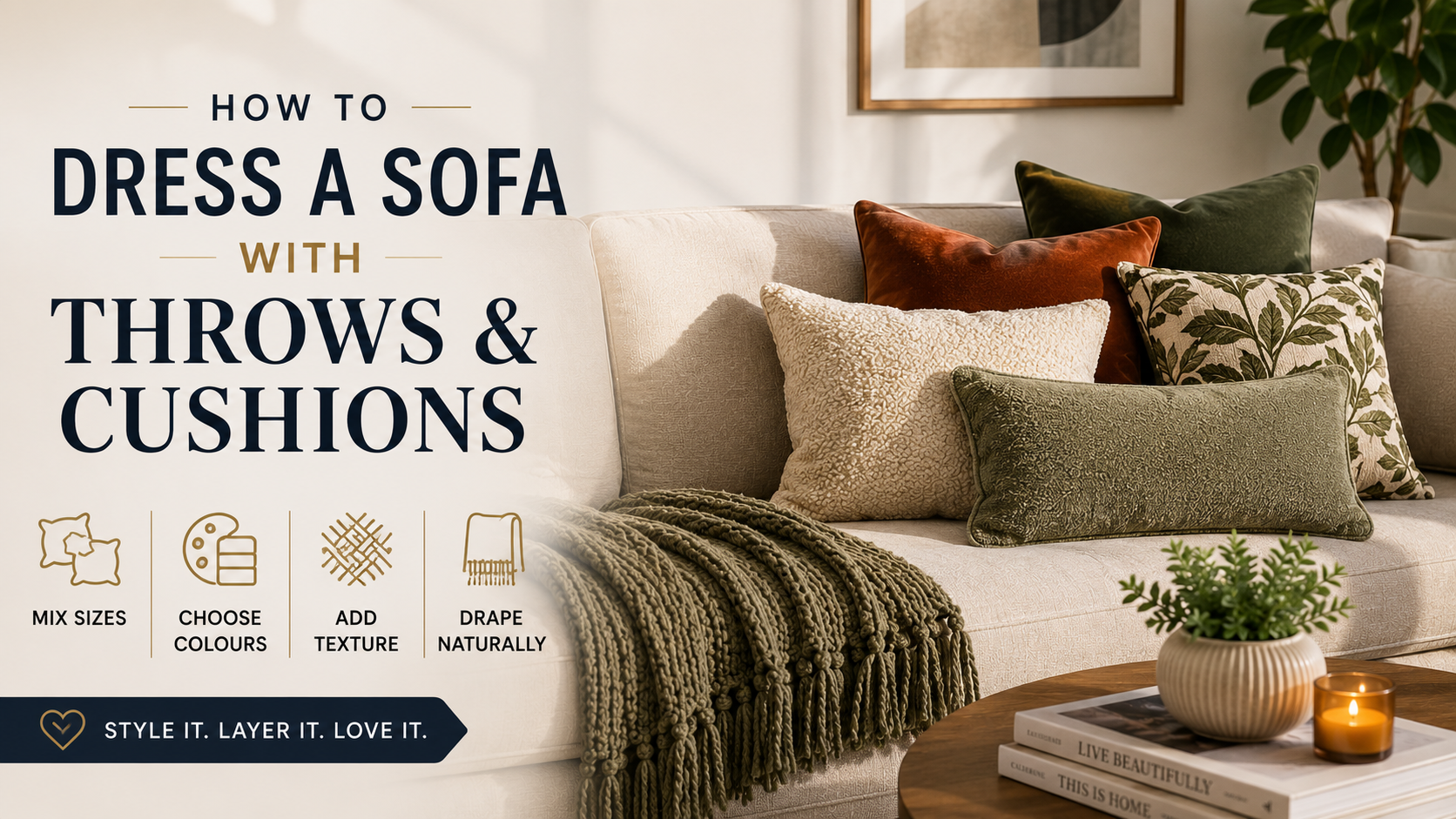
Question: How to Dress a Sofa with Throws and Cushions? Quick Answer: To dress a sofa with throws and cushions, use odd numbers of cushions in mixed sizes and textures, drape a throw casually over one arm or the back, and layer everything from large to small. Choose colours that either match your room’s palette or contrast it deliberately. Mix at least three textures for the best result.
A bare sofa looks unfinished. A few well-placed cushions and a soft throw change everything.
It’s the cheapest, fastest way to transform a living room. No paint. No new furniture. Just a little thought and a few soft furnishings.
This guide shows you exactly how to do it. Real techniques. Clear steps. No guesswork.
Let’s dress that sofa properly.
Start With Your Colour Plan | How to Dress a Sofa with Throws and Cushions
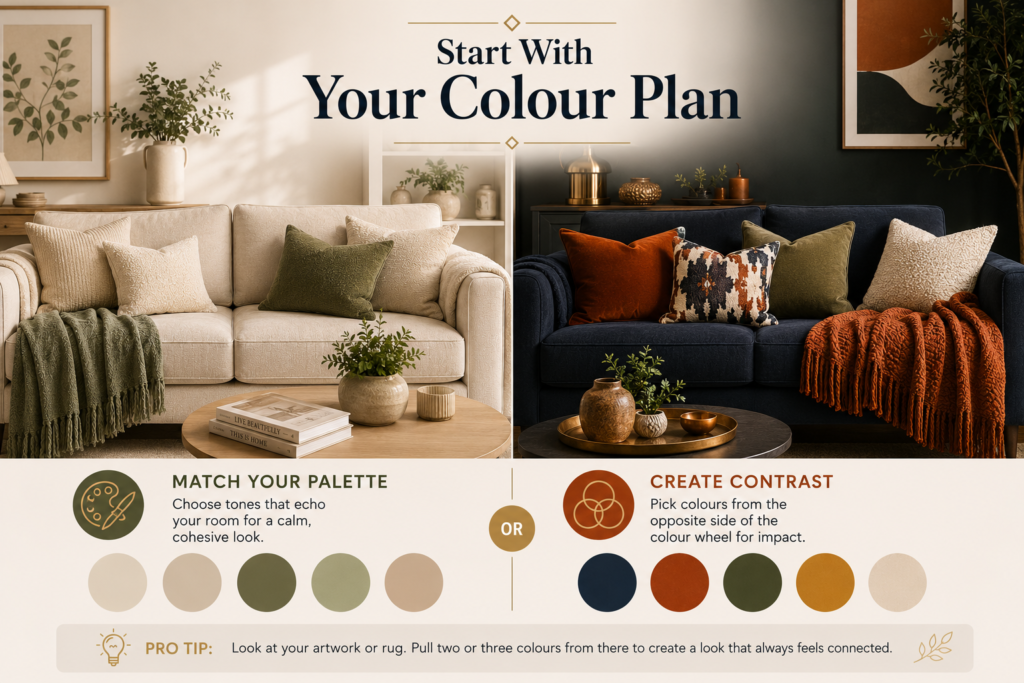
Before you buy anything, decide your direction. There are two ways to go.
Match your palette — Choose cushions and throws in tones that echo your room. Pull colour from your walls, your rug, or a piece of art. This creates a calm, pulled-together look.
Contrast on purpose — Pick colours from the opposite side of the colour wheel. Pink and green. Orange and blue. Mustard and navy. This creates energy and makes the sofa the star of the room.
Neither is wrong. Pick the one that matches your taste.
💡 Pro Tip: If you’re not sure where to start, look at your existing artwork or rug. Pull two or three colours straight from there. It takes the guesswork out completely and guarantees everything feels connected.
How Many Cushions Do You Actually Need?
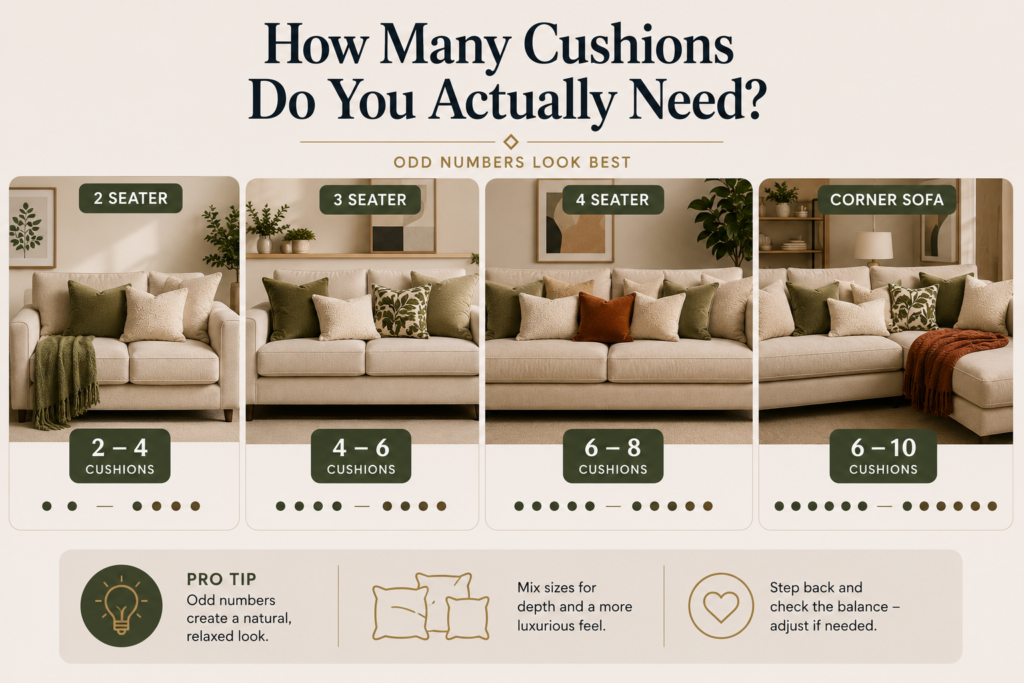
This is the question everyone asks. Here’s your answer.
| Sofa Size | Cushion Count |
|---|---|
| 2 seater | 2–4 |
| 3 seater | 4–6 |
| 4 seater | 6–8 |
| Corner sofa | 6–10 |
Always lean toward odd numbers. Three looks deliberate. Five looks naturally layered. Even numbers can look stiff and symmetrical.
Layer by Size — The Technique That Changes Everything
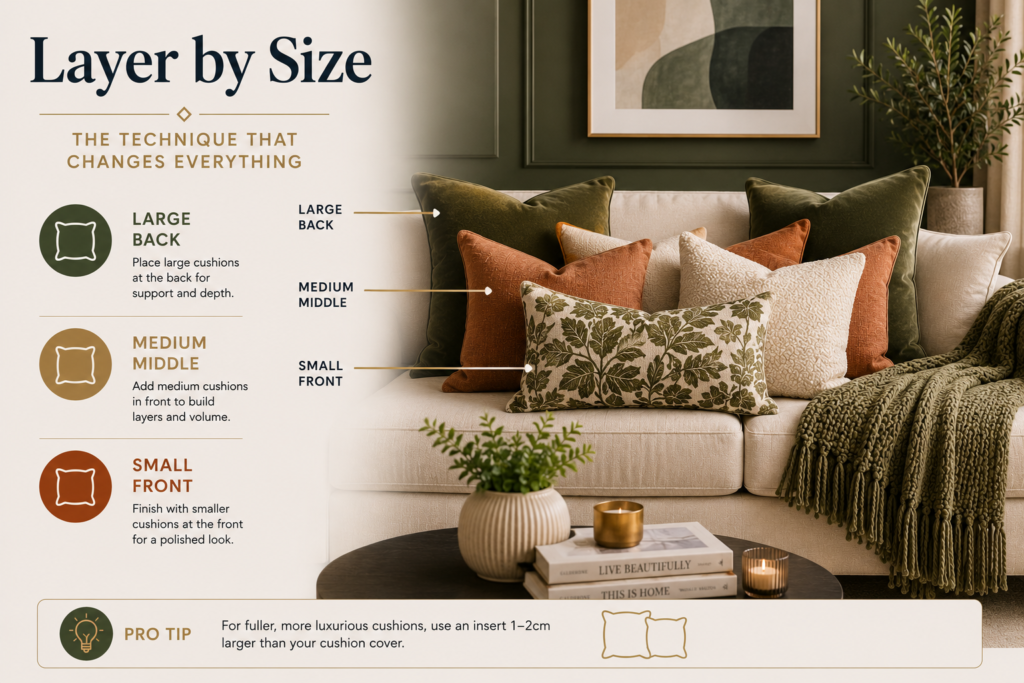
This is the secret most people miss.
Place your largest cushions at the back, against the sofa arms or corners. Add medium cushions in front of those. Finish with one or two smaller cushions at the very front.
This creates depth. It looks styled rather than scattered. Big to small, back to front — remember that simple order and your sofa will always look right.
💡 Pro Tip: Want plump, full-looking cushions? Buy a cushion cover one to two centimetres smaller than your cushion pad. The pad still fits inside easily, but the slightly tighter cover makes every cushion look fuller and more luxurious.
Mixing Colours the Right Way
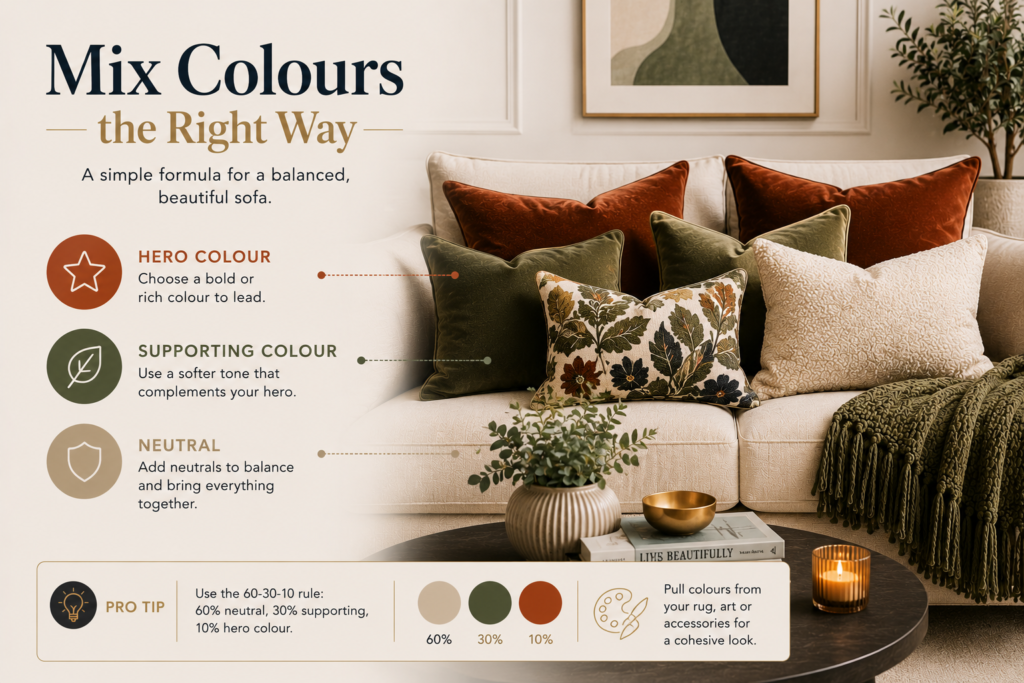
Stick to one colour family, and everything feels calm. Mix families carefully, and you get energy without chaos.
For a richer finish, you can combine crush velvet with other fabrics when choosing velvet cushions and throws.
A simple rule that works every time: pick one hero colour, one supporting colour, and one neutral. For example — rust as your hero, cream as your support, and a warm grey texture as your neutral. Three colours. Endless combinations. Always balanced.
If your sofa already has a bold pattern, keep your cushions simpler. Let the sofa lead. If your sofa is plain, this is your moment — go bold with pattern and colour.
Mixing Textures — Where the Real Magic Happens
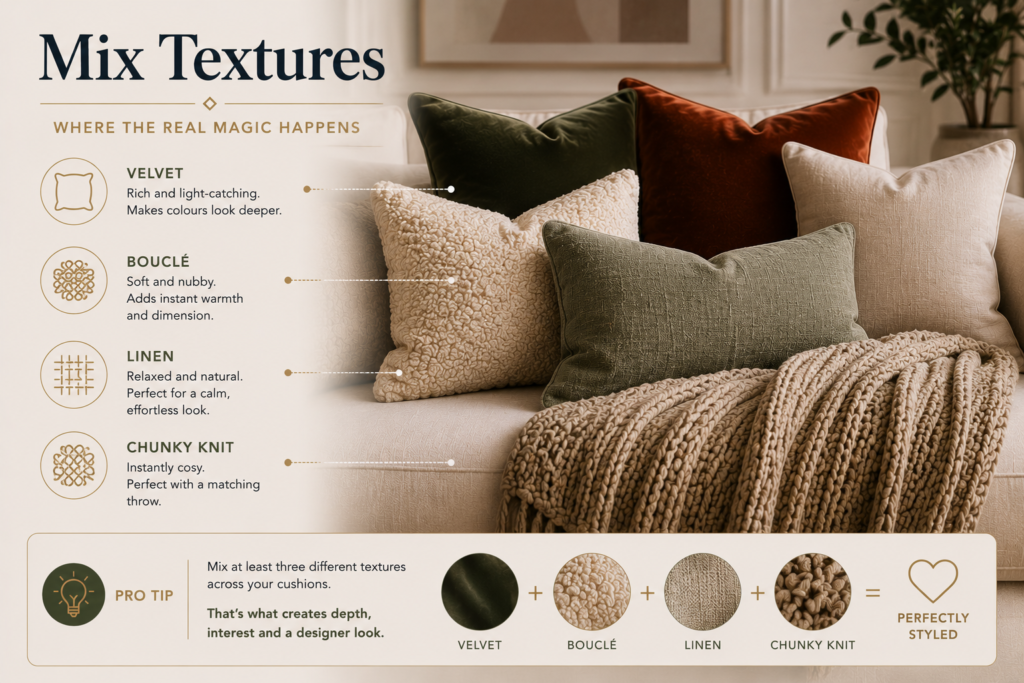
Colour gets the attention. Texture does the real work.
Velvet — Rich and light-catching. Makes every colour look deeper.
Boucle — Soft and nubby. Hugely popular in UK homes right now.
Linen — Relaxed and natural. Perfect for a calmer, Scandi-style room.
Chunky knit — Instantly cosy. Works beautifully with a matching throw.
Faux fur — Maximum comfort. Best saved for autumn and winter styling.
Mix at least three different textures across your cushions. Velvet next to boucle next to linen — that combination alone makes a sofa look professionally styled rather than just covered in cushions.
💡 Pro Tip: Pick a throw and sofa in contrasting textures. A smooth leather or velvet sofa comes alive with a chunky knit or linen throw on top. A textured fabric sofa pairs beautifully with a smoother, silkier throw. Contrast is what makes both pieces stand out.
How to Drape a Throw — Four Methods That Always Work
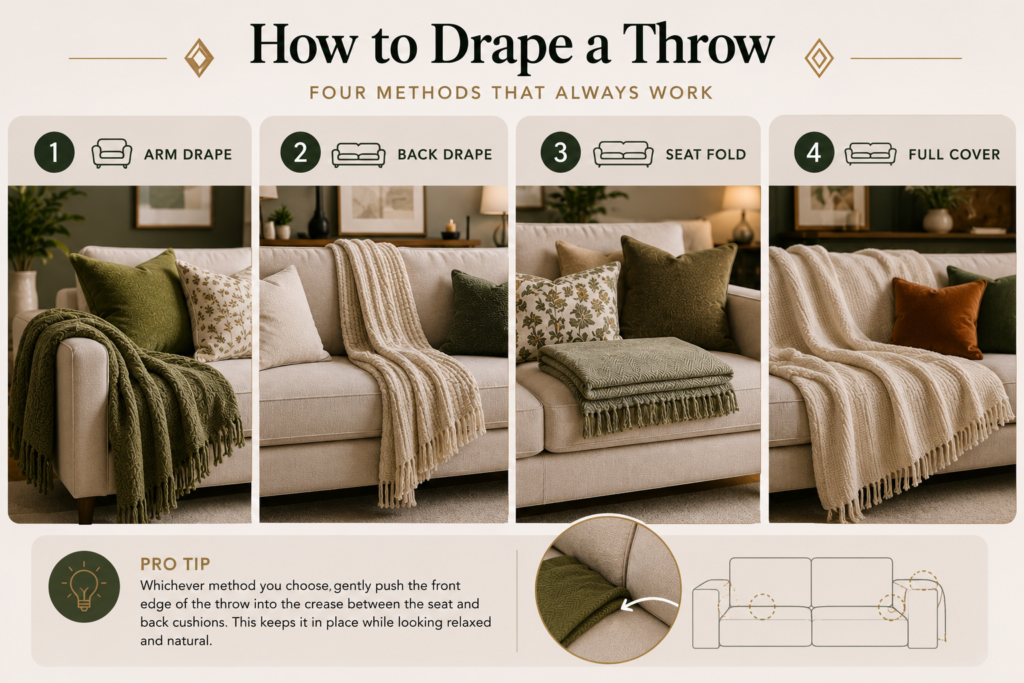
The way you place a throw matters as much as the throw itself.
The casual arm drape
Hold one corner of the throw. Place the tip over the arm of the sofa and let the rest fall forward naturally. Don’t smooth it out too much — a little relaxed movement makes it look genuinely lived-in.
The back drape
If you are styling a 5 seater sofa, use the same approach of layering cushions and a throw so the larger surface still feels balanced.
If you are coordinating a room makeover, it can help to think about larger pieces like sliding wardrobes alongside your sofa colours so the whole space feels connected.
Fold the throw in half lengthways. Lay it across the back of the sofa, letting it fall slightly forward into the back cushions. This looks neat and intentional — great for a tidier, more structured room.
The seat fold
Fold the throw neatly and place it across one seat cushion. This works well with smoother, more tailored fabrics and suits a more formal living room style.
The full cover
Open the throw out fully and lay it across the whole sofa, tucking the edges gently behind the cushions. This needs a generously sized throw — anything too small here looks messy rather than cosy.
💡 Pro Tip: Whichever method you choose, gently push the front edge of the throw into the crease between the seat and back cushions. This tiny step stops it sliding off the sofa and keeps the whole look tidy without losing that relaxed, natural feel.
Throws by Sofa Size
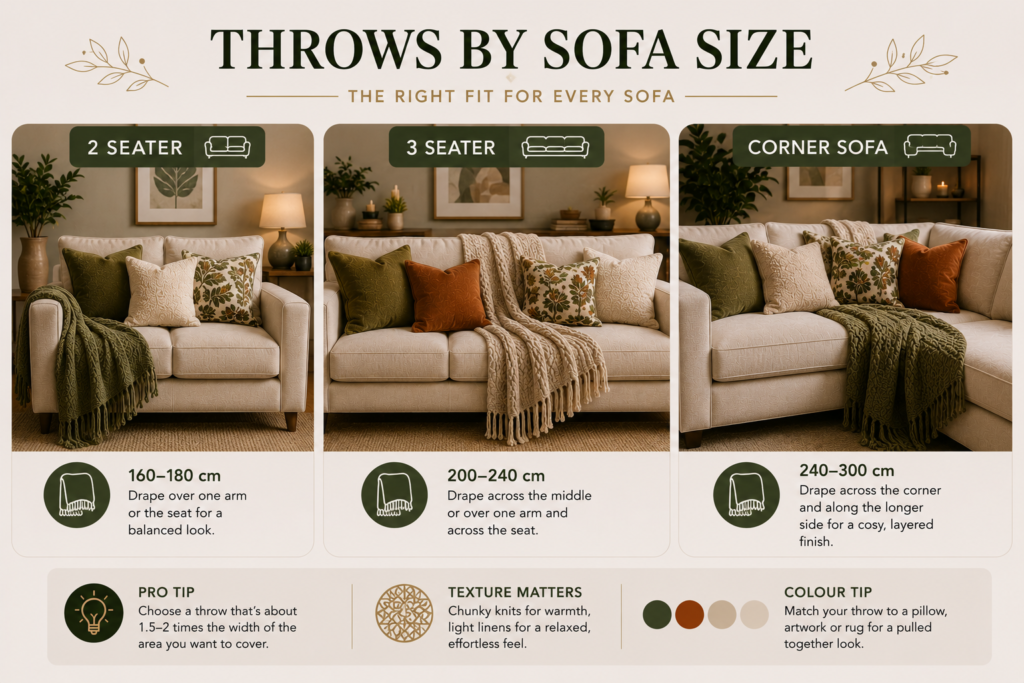
| Sofa Size | Best Approach |
|---|---|
| 2 seater | One throw, draped casually over the back or one arm |
| 3 seater | One throw using the back drape or arm drape for a more layered finish |
| 4 seater / Corner | One larger throw, or two complementary throws for a fuller, layered look |
Always size up rather than down. A throw that barely covers the arm looks like an afterthought. A generous throw — at least 130cm wide — drapes beautifully and looks intentional every time.
Cushion and Throw Styling by Room Mood
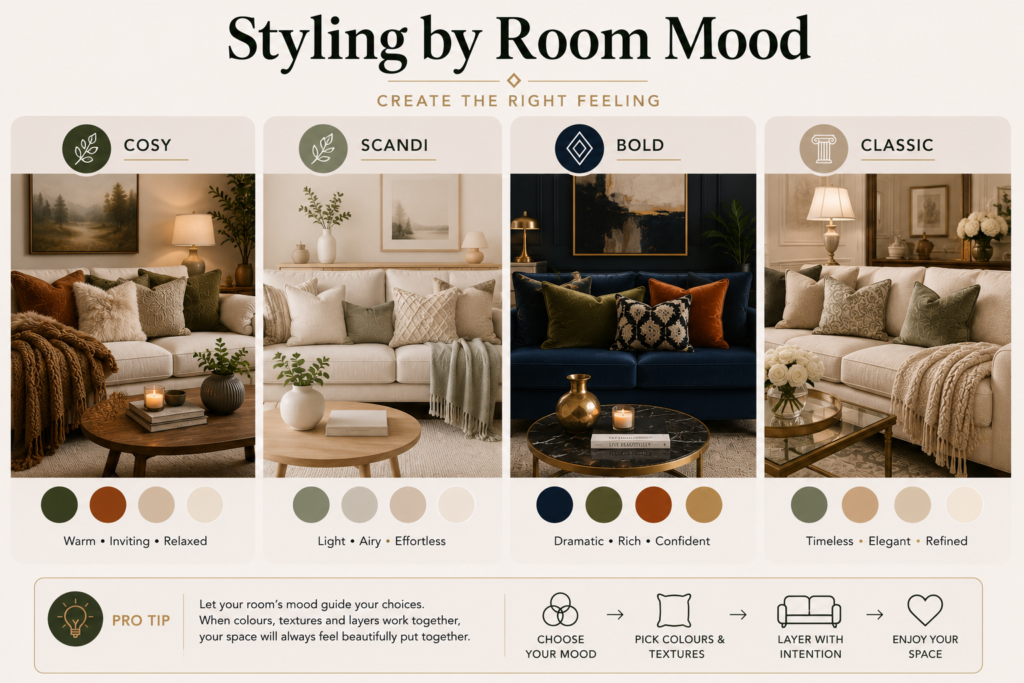
Cosy and warm — Chunky knits, faux fur, warm tones like rust, mustard, and cream. Perfect for autumn and winter evenings.
Calm and Scandi — Soft neutrals, linen textures, loosely draped throws. Simple, restful, and easy to live with.
Bold and maximalist — Jewel tones, pattern mixing, contrasting textures. A black or dark sofa handles this beautifully — try a ruby cushion against a sapphire throw for real drama.
Classic and elegant — Velvet cushions, a neatly folded wool throw, a muted colour palette. Timeless and quietly luxurious.
For dark grey sofas specifically, the FurniFolks dark grey sofa collection works beautifully with almost every mood above — the depth of the fabric gives every colour and texture room to shine.
Seasonal Swapping — Keep It Fresh All Year
One of the best things about cushions and throws? You can change them with the seasons for almost no cost.
Autumn and winter — Rust, mustard, burgundy, and forest green. Chunky knits and faux fur.
Spring and summer — Soft sage, dusty pink, pale yellow. Linen and lightweight cotton.
Keep a basket nearby to store off-season covers. Swapping takes ten minutes and makes the whole room feel new again.
Common Mistakes to Avoid
Even numbers everywhere — Stick to odd numbers for a naturally styled look.
All one texture — Flat and forgettable. Always mix at least three.
A throw that’s too small — Looks like you ran out of fabric. Always size up.
Over-matching everything — A little contrast makes a room feel alive. Total colour matching can feel flat.
Skipping the layering order — Big at the back, small at the front. Skip this and the arrangement looks messy rather than styled.
Summing Up
Dressing a sofa with throws and cushions is one of the easiest styling wins in your whole home. A few cushions in mixed sizes and textures. One throw, draped with a little relaxed confidence. That’s genuinely all it takes.
Pick your colour direction. Layer by size. Mix your textures. Drape your throw with intention, not perfection. Follow that order and your sofa will look like it belongs in a magazine — without spending a fortune to get there.
Frequently Asked Questions
How many cushions should I put on my sofa? Four to six cushions suit most 3 seater sofas. Use odd numbers and mix sizes for the most natural, styled look. Smaller 2 seaters need just two to four.
How do I drape a throw so it looks natural? Hold one corner of the throw and let it fall casually over the arm or back of the sofa. Avoid smoothing it too neatly — a little relaxed movement looks far more natural than a perfectly folded throw.
Should cushions match the sofa or contrast it? Either works beautifully. Matching tones create a calm, cohesive look. Contrasting colours add energy and make the sofa the focal point of the room. Choose based on the mood you want.
What size throw do I need for a 3 seater sofa? A throw at least 130cm wide drapes well on most 3 seater sofas. Larger sofas or full-coverage styling need an even bigger throw to avoid looking skimpy.
How do I stop a throw sliding off the sofa? Tuck the front edge gently into the crease between the seat and back cushions. This small step keeps it in place while still looking relaxed and natural.
Can I mix patterns on sofa cushions? Yes. Choose patterns that share at least one colour to keep the look cohesive. Mixing two or three patterns with a similar colour palette feels intentional rather than chaotic.
Once your sofa is beautifully dressed, the practical questions often follow. Where should you actually buy your cushions, throws, and the sofa itself from? Read our guide on where to buy a sofa for honest, practical advice on finding quality furniture in the UK.