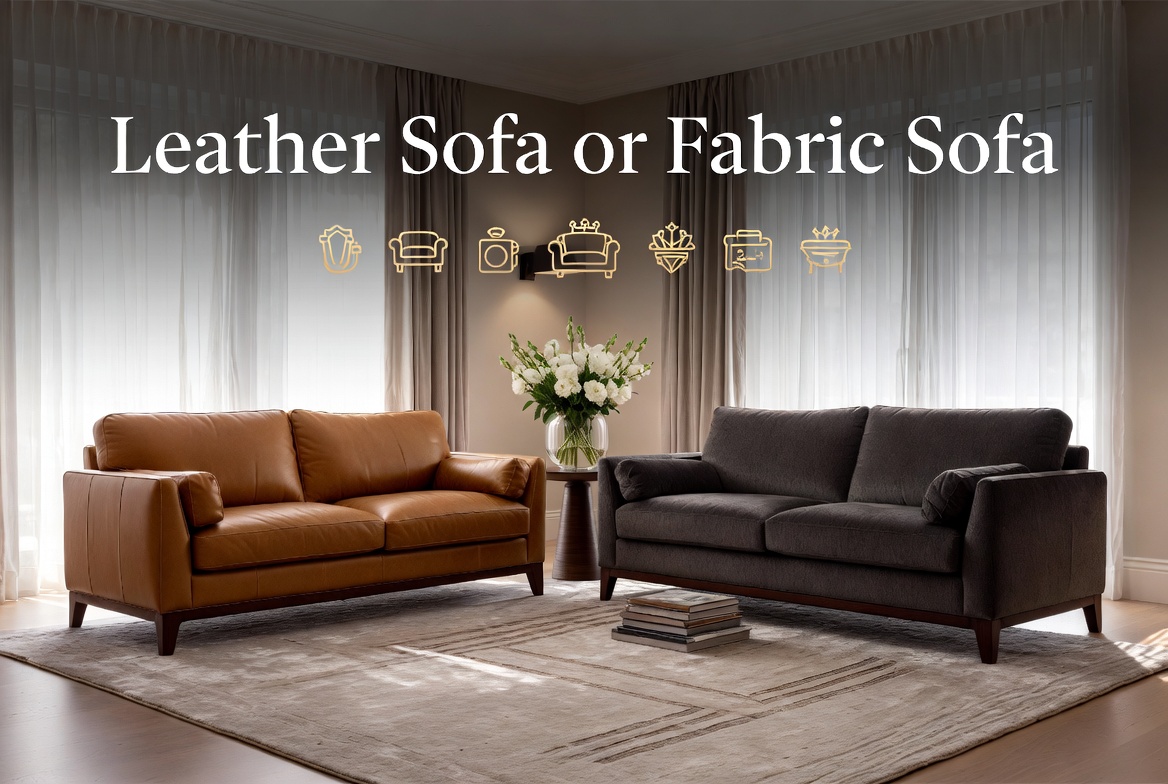
A simple question comes in mind when buying; Leather Sofa or Fabric sofa | Which one is the best?
The Quick Answer is: Fabric sofas feel warmer and softer from the first sit, offer far more colour and texture choice, and tend to suit UK homes that prioritise comfort and cosiness. Leather sofas wipe clean in seconds, resist dust and allergens better, and develop a beautiful patina over time. Neither is universally better — the right choice depends on your household, your climate control, and how you actually use your sofa.
You’ve narrowed your search down to two finalists, and now you’re stuck right at the finish line. Leather or fabric?
It’s one of the most common questions UK sofa shoppers face, and it’s a genuinely personal one. Both materials are excellent. Both have loyal fans for good reason. The right answer depends entirely on how you live, not which material is objectively “best.”
This is the final piece in our sofa guide series, and it brings together everything that actually matters when making this decision. Let’s settle it properly.
Comfort — Which Feels Better to Sit On?
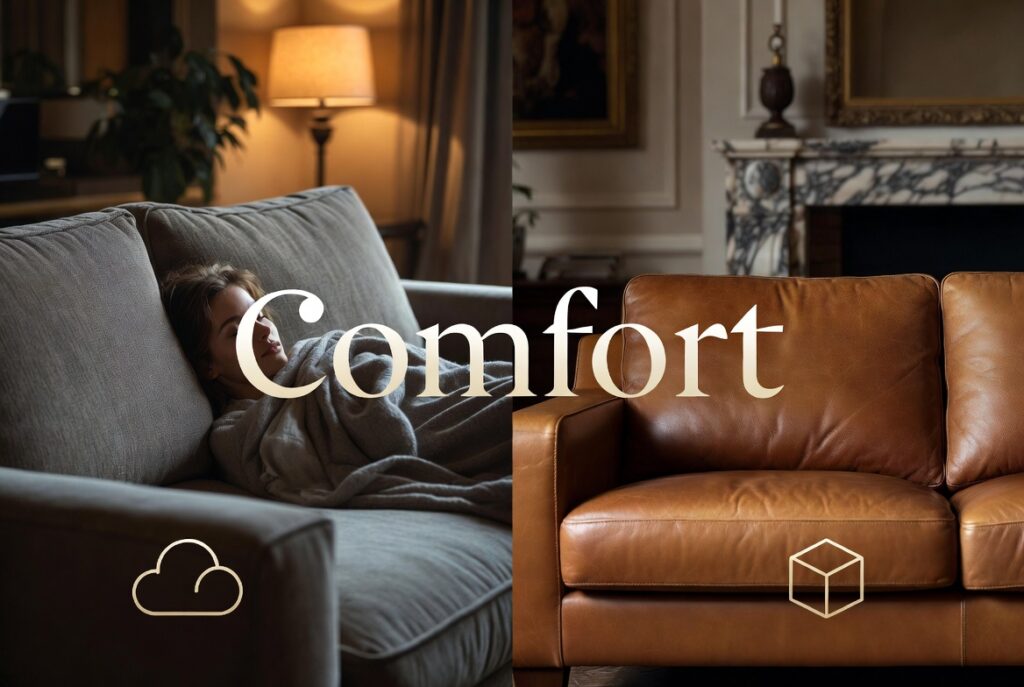
This is usually the very first thing people notice, and it’s where the two materials differ most obviously.
Fabric feels soft and inviting the moment you sit down. It gives slightly under your weight, moulds to your body over time, and creates that cosy, sink-in feeling many people associate with a proper night in. It also stays at a fairly consistent temperature, without that sudden chill you sometimes get from leather on a cold morning.
Leather feels firmer to begin with. It has a noticeable break-in period, gradually softening and shaping to your body with regular use. Once broken in, quality leather becomes wonderfully comfortable, though it does respond more to room temperature than fabric does, feeling cooler in winter and occasionally a touch warm in summer.
💡 Pro Tip: If you’re torn on comfort alone, think about how you actually use your sofa. Curling up under a blanket for hours of TV? Fabric usually wins. Sitting upright for reading or quick relaxation between tasks? Leather’s firmer structure often suits that better.
Maintenance — What Does Daily Life Actually Look Like?
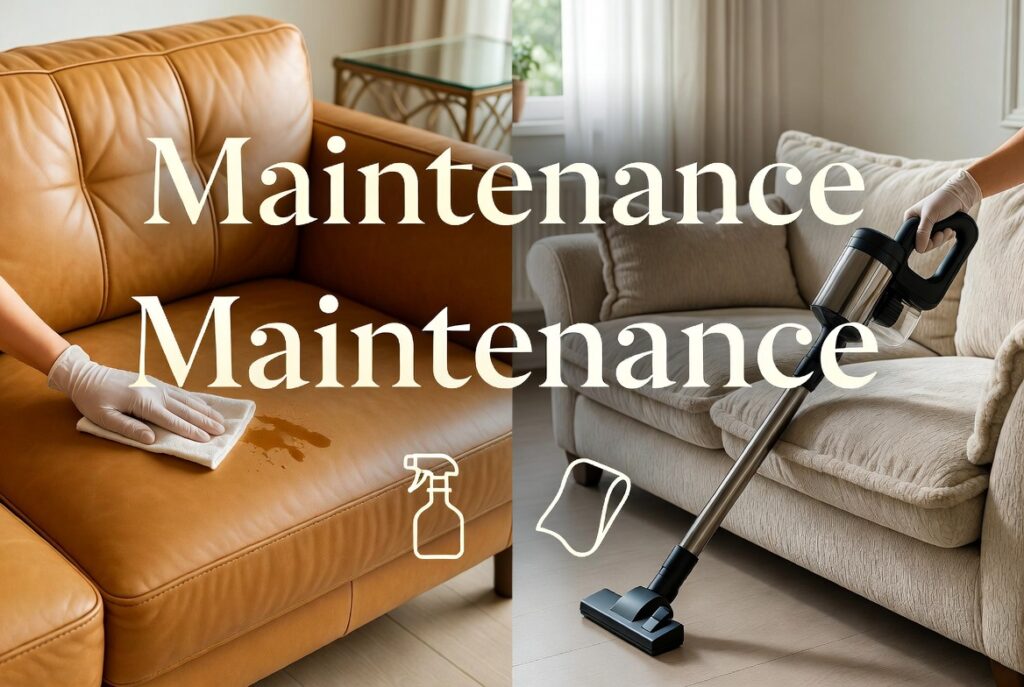
This is where the two materials really part ways, and it’s often the deciding factor for busy households.
Leather is remarkably low maintenance day to day. Spills sit on the surface rather than soaking in, so a quick wipe with a clean cloth usually sorts most everyday messes immediately. It does need conditioning every few months to stop it drying out, particularly in centrally heated UK homes through winter, but beyond that, upkeep is minimal.
Fabric needs a little more regular attention. Weekly vacuuming keeps dust and crumbs from building up, and spills need prompt blotting to avoid setting in. The good news is that modern performance fabrics have changed this conversation considerably. Many now come with stain-resistant treatments or tightly woven, durable weaves that handle everyday life far better than fabrics of years past.
| Task | Leather | Fabric |
|---|---|---|
| Daily spills | Wipe away quickly | Blot immediately, may need a mild cleaning solution |
| Weekly care | Light dusting | Vacuum thoroughly |
| Periodic care | Condition every 4–6 months | Deep clean every 6–12 months |
| Allergy-prone homes | Generally better — doesn’t trap dust | Removable covers and a good vacuum help significantly |
Sofa Durability — Which One Actually Lasts Longer?

Both materials can last for many years, but they get there in different ways.
Quality leather, particularly full-grain or top-grain, resists punctures and general wear extremely well. It can develop scratches, especially in homes with pets, but many people genuinely love the lived-in character this creates over time rather than seeing it as damage. A well-cared-for leather sofa can comfortably last well over a decade, sometimes considerably longer.
Fabric durability depends heavily on the specific weave and quality. A tightly woven, high-rub-count fabric on a solid hardwood frame can easily reach a decade of regular use too, and removable covers extend that lifespan even further since you can wash or eventually replace them without needing a whole new sofa.
The honest takeaway here is that build quality matters more than the material itself. A premium fabric sofa will often outlast a cheap leather one, and vice versa. The frame, the cushion filling, and the construction underneath the surface matter just as much as what’s on top of it.
Cleaning and Stains — Leather Sofa or Fabric Sofa | Which one is the best?
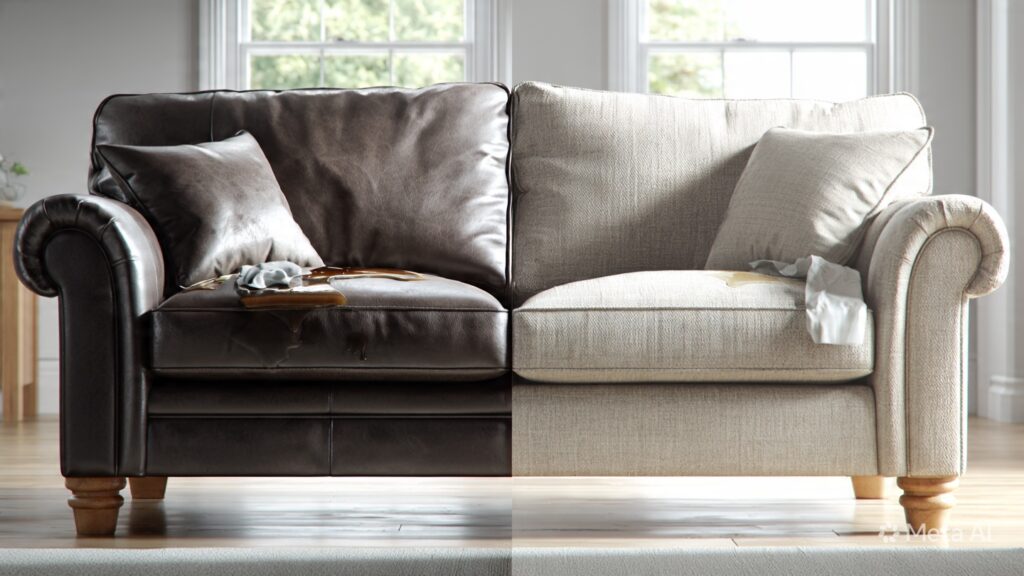
Spills happen, especially in busy UK family homes, so this matters more than most people initially expect.
Leather has the edge for sheer speed and simplicity. Most everyday spills, including tea, juice, and food, wipe away cleanly within seconds, since the liquid sits on the surface rather than absorbing into it. It can still stain from certain things though, particularly ink, dye transfer from dark clothing, and oily substances, so it’s not entirely immune.
Fabric is more absorbent by nature, which means spills need quicker attention to avoid setting. However, many fabrics today, including microfibre, polyester blends, and treated cottons, handle spills far better than older varieties ever did, often shrugging off a quick blot with barely a trace left behind. Removable, washable covers are a genuine game-changer here too, since they let you wash away anything that does set in rather than treating it on the sofa itself.
💡 Pro Tip: If spills are a genuine daily concern in your household, ask specifically about the fabric’s rub count when shopping. A figure of 25,000 or higher generally indicates a fabric built to withstand heavy domestic use, with 30,000 or above being an excellent benchmark for homes with children or pets.
Living With Pets and Children
This is often the single biggest factor that tips the decision one way or the other.
For households with pets, leather resists odours noticeably better than fabric, since smells don’t soak into the material the way they can with textiles. The trade-off is scratch risk from claws, which can mark the surface, though many owners find these marks add character rather than detracting from the sofa.
For households with children, fabric tends to be the more forgiving choice overall, particularly performance fabrics designed specifically for heavy use. It offers a softer surface for little ones to play and nap on, and most spills and marks come out with a bit of prompt attention. Leather works well too if you prioritise speed of cleanup over everything else, since wiping up a juice spill takes seconds rather than minutes.
Neither material is wrong for family life. It genuinely comes down to whether you’d rather manage occasional scratches or occasional stains, since both are simply part of living with an active household.
Allergies and Dust
If allergies are a consideration in your home, this is worth knowing.
Leather doesn’t trap dust, dander, or allergens within its surface the way fabric can, which makes it a popular choice among people who suffer from dust-related sensitivities. A simple wipe keeps the surface clear without disturbing trapped particles.
Fabric can hold onto dust and pet dander more readily, though this is far less of an issue than it once was. A removable cover that goes in the wash, combined with regular vacuuming using a vacuum with good filtration, manages this effectively for most households.
Style and Personality
This is where fabric genuinely pulls ahead for most people, simply through sheer choice.
Fabric sofas come in an enormous range of colours, textures, and patterns, from smooth cotton to plush velvet, chenille, and boucle. This variety means you can match your sofa precisely to your existing decor, your wall colour, or your rug, and you have the freedom to choose something bold and characterful if that’s your style.
Leather offers a more limited palette, typically classic shades like black, brown, tan, and grey, but it brings a different kind of appeal. The natural texture and consistent tone create a sleek, sophisticated look that suits modern, minimalist, or classic interiors particularly well. It’s a material that ages gracefully too, developing a patina over the years that many people find genuinely beautiful rather than something to avoid.
If your taste leans toward warmth, pattern, and personality, fabric usually delivers more easily. If you’re drawn to clean lines, consistency, and understated elegance, leather often feels like the more natural fit.
Price and Long-Term Value
Budget plays a real role here, and the two materials sit at noticeably different price points.
Fabric sofas are generally more affordable upfront, with good-quality options widely available without stretching the budget too far. This makes fabric an excellent choice if you like to refresh your decor every few years, since the lower initial cost makes that kind of change far more practical.
Leather typically costs more initially, reflecting both the material itself and the more involved manufacturing process behind it. Many people view this as a long-term investment rather than a simple upfront cost though, since a well-maintained leather sofa can outlast several cheaper alternatives, potentially working out as similar value over a longer period of ownership.
Neither approach is inherently wiser. It depends on whether you’d rather pay less now and potentially replace sooner, or pay more upfront for a piece designed to last considerably longer.
How UK Weather and Heating Affect the Decision
Britain’s climate genuinely plays a role in this choice, more than people often realise.
Fabric tends to feel consistently comfortable across the seasons. It doesn’t deliver that cold shock leather sometimes gives on a chilly winter morning, and it stays breathable enough to avoid feeling uncomfortably warm in the height of summer.
Leather is more sensitive to your home’s heating and humidity levels. Centrally heated UK homes through the colder months can dry leather out more quickly, which makes regular conditioning genuinely important rather than optional. In older properties with damp-prone rooms, however, leather can actually be more forgiving than absorbent fabric, since it doesn’t soak up moisture from the air in the same way.
💡 Pro Tip: If you choose leather and live in a home with central heating, keep your sofa a sensible distance away from radiators and direct heat sources. This single habit, combined with conditioning every four to six months, makes a noticeable difference to how long the leather stays supple rather than drying out and cracking.
A Simple Decision Framework
If you’re still torn, run through these quick questions honestly.
Do you have young children who nap or play on the sofa often? Fabric’s softer surface and forgiving performance treatments usually suit this better.
Do you have pets and want to minimise lingering odours? Leather has the edge here, provided you’re comfortable with the possibility of occasional scratches.
Do you or a family member suffer from dust allergies? Leather is generally the more sensible choice, since it doesn’t trap allergens the way fabric can.
Is your budget under roughly £900? Fabric typically offers better comfort and style at this price point.
Do you want the lowest possible day-to-day maintenance? Leather wins decisively here, particularly pigmented leather finishes.
Do you want maximum colour and texture choice to match your room? Fabric offers far greater flexibility and personality.
Does your room get a lot of direct sunlight or sit in a particularly hot spot? Fabric generally handles heat and light exposure better than leather over time.
You Don’t Have to Choose Just One
It’s worth remembering that mixing materials within the same room is a genuinely popular and stylish approach, rather than something to avoid.
A leather sofa paired with fabric armchairs, or a fabric sofa alongside a leather accent chair, creates visual depth and lets you enjoy the benefits of both materials at once. The key to making this work is keeping your colour palette and overall style consistent, rather than worrying about matching the materials themselves.
For dark grey fabric options specifically, the FurniFolks dark grey sofa collection offers a genuinely wide range of premium textures, from plush velvet to chenille and jumbo cord, giving you plenty of room to find a fabric finish that suits your lifestyle perfectly.
Summing Up
There’s no single correct answer in the leather versus fabric debate, and that’s actually good news. It means the right choice is simply the one that fits how you genuinely live, not a universal rule everyone has to follow.
Think honestly about your household, your climate control, your budget, and the look you’re drawn to. Both materials, chosen well and cared for properly, can give you years of comfort and genuine pride in your living room. The best sofa isn’t the one that wins on paper. It’s the one that feels exactly right every single time you sit down on it.
Frequently Asked Questions
Is leather or fabric better for a family with children? Fabric is generally more forgiving for families with young children, offering a softer surface and easier handling of everyday spills, especially with modern performance fabrics. Leather works well too if quick cleanup is your top priority.
Does leather last longer than fabric? Quality leather often lasts slightly longer with proper care, but a well-made fabric sofa with a strong frame and durable weave can comfortably last a decade or more as well. Build quality matters more than the material alone.
Which is easier to clean, leather or fabric? Leather is generally quicker and easier to clean day to day, since most spills wipe away from the surface within seconds. Fabric needs prompt blotting and occasional deeper cleaning, though many modern fabrics resist staining remarkably well.
Is fabric or leather better for allergies? Leather is typically the better choice for allergy sufferers, since it doesn’t trap dust and dander the way fabric can. Removable, washable fabric covers combined with regular vacuuming help close this gap significantly.
Which is more comfortable, leather or fabric? Fabric tends to feel softer and warmer from the very first sit, while leather feels firmer initially and softens with a break-in period. Comfort genuinely comes down to personal preference and how you like to relax.
Can I mix leather and fabric furniture in the same room? Yes, absolutely. Pairing a leather sofa with fabric chairs, or the reverse, is a popular and stylish approach that adds visual depth to a room. Keeping your colour palette consistent is more important than matching the materials themselves.
That brings our complete sofa guide series to a close. From styling and cleaning to choosing the perfect size, shape, and material, you now have everything you need to make confident decisions for your living room. Explore the full FurniFolks sofa collection to find the perfect piece for your home, whatever you decide.