
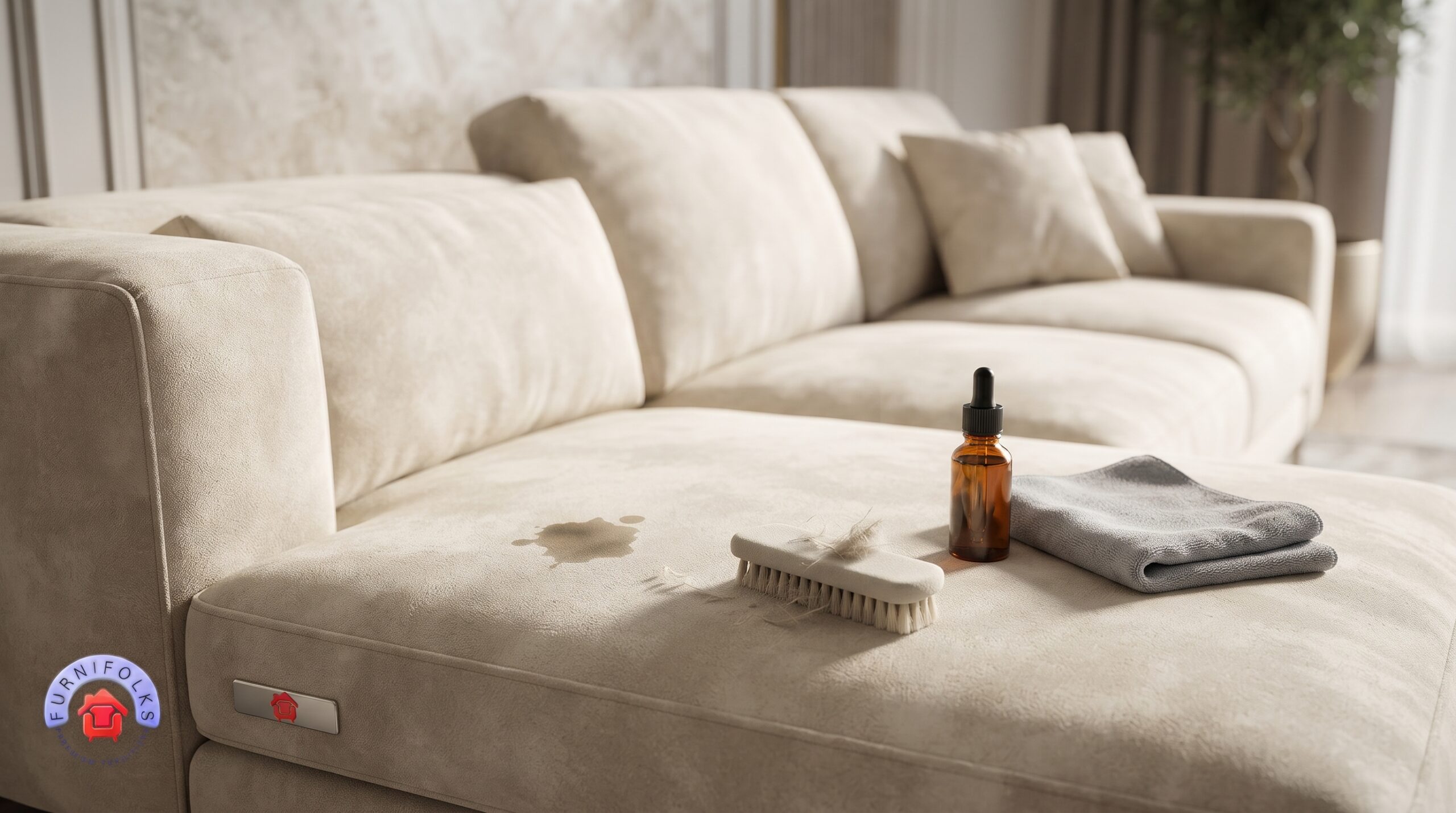
Quick Answer: To clean a suede sofa, vacuum weekly with a soft brush attachment, brush the nap regularly in one direction, and blot fresh spills immediately with a dry cloth. Never use water on natural suede. Use a suede eraser for dry marks and a specialist suede cleaner or diluted white vinegar for stains. Always test on a hidden area first.
Suede has a reputation. People hear the word and think “high maintenance.” “Impossible to clean.” “One spill and it’s ruined.”
Here’s the good news. None of that is true.
Suede is genuinely manageable once you know the right approach. It just plays by different rules than fabric or leather. Get those rules right and a suede sofa stays soft, rich, and beautiful for years.
This guide walks you through everything — identifying your suede type, weekly care, stain removal, and the deep clean that keeps it looking genuinely luxurious. Let’s get started.
Real Suede vs Microsuede — Know the Difference First
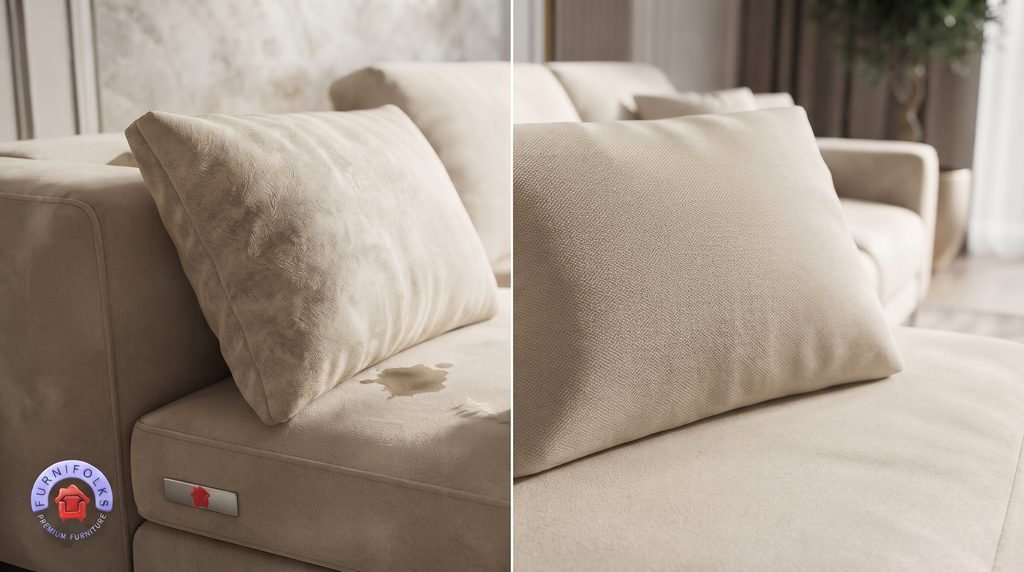
This is the single most important thing to understand before you clean anything.
Real suede comes from the underside of animal hide. It’s soft, breathable, and beautifully tactile. It’s also genuinely sensitive to water — moisture is its biggest enemy. Real suede needs a dry-first approach at every stage.
Microsuede (also called faux suede) is a synthetic alternative made from tightly woven polyester fibres. It looks and feels remarkably similar to real suede but handles moisture far better. It’s more resistant to stains and easier to maintain day-to-day.
How to tell which one you have:
Run your hand gently across the surface. Real suede shows subtle changes in the nap direction as you move your hand — almost like a soft shadow shifting. Microsuede feels smoother and more uniform across the whole surface.
Still unsure? Check the cleaning code label on your sofa — usually underneath a cushion or on the frame.
| Code | What It Means |
|---|---|
| W | Water-based cleaning is safe |
| S | Solvent-based cleaning only — no water |
| WS | Both water and solvent-based cleaning are safe |
| X | Vacuum only — call a professional for anything else |
💡 Pro Tip: Photograph your sofa’s cleaning code label and save it on your phone. With suede specifically, using water on the wrong type can cause permanent watermarks within seconds. Having that code instantly available — rather than searching for it with a spreading spill in front of you — makes all the difference.
What You’ll Need
Suede cleaning uses simple, affordable supplies. Here’s your complete kit:
- Vacuum cleaner with a soft brush attachment
- A dedicated suede brush (rubber or brass bristle)
- Clean dry cloths — white, ideally
- A suede eraser or clean white rubber eraser
- Cornstarch or talcum powder
- White vinegar (for microsuede or as directed by your label)
- A specialist suede cleaner (optional, but useful for stubborn marks)
Everything here costs very little and lasts a long time. You genuinely don’t need anything fancy.
Weekly Care — The Habits That Keep Suede Looking Beautiful
Suede thrives on consistency. A little weekly attention prevents most problems before they start.
Vacuum gently, once a week
Use the soft brush attachment on low suction. High suction wears down the nap over time — keep it gentle. Work across every surface, paying close attention to seams and crevices where dust and crumbs collect.
Brush the nap weekly
This is the single habit that keeps suede looking genuinely luxurious. Use a dedicated suede brush and brush gently in the direction of the natural grain. This lifts the nap, removes light surface dust, and restores that soft, velvety texture suede is loved for.
Always brush in one consistent direction. Brushing against the grain creates an uneven, patchy appearance.
Rotate your cushions
Move cushions around regularly so wear distributes evenly. Suede can develop a slightly matted, flattened look in high-use areas — rotating cushions helps prevent this.
💡 Pro Tip: If you notice an area of suede looking matted or flattened from regular sitting, don’t panic. Brush it gently with your suede brush in small circular motions, applying slightly more pressure than usual. The nap lifts back up beautifully in most cases — and it’s honestly one of the most satisfying little fixes in home care.
How to Deal With Fresh Spills
Speed matters more with suede than almost any other sofa fabric. Suede is porous — it absorbs liquid quickly. The faster you act, the better your result.
Step 1 — Blot immediately
Grab a clean dry cloth. Press firmly onto the spill and lift straight up. Never rub. Rubbing pushes the liquid deeper into the suede and spreads the mark wider.
Step 2 — Keep blotting
Continue with fresh sections of cloth until you’ve absorbed as much liquid as possible. Suede holds onto moisture more than you’d expect — be thorough here.
Step 3 — Let it dry completely before doing anything else
This is crucial. Don’t apply any cleaning product to suede while it’s still damp. Open a window for airflow and allow the area to air dry fully at room temperature. This can take a few hours depending on how much liquid was involved.
Step 4 — Brush once dry
Once the area is completely dry, brush gently with your suede brush in the direction of the nap. This usually removes any remaining trace of the spill and restores the texture beautifully.
How to Remove Dry Stains and Marks
Once a spill has dried, you’re dealing with a dry stain — and this calls for a slightly different approach.
Use a suede eraser
A suede eraser — or even a plain white rubber eraser — works wonders on dry marks. Gently rub the affected area in small, light strokes. Don’t press too hard. The eraser lifts the mark from the surface without introducing any moisture.
Once the mark lifts, brush the area with your suede brush to restore the nap.
For tougher dry marks
A specialist suede cleaning block — available from most UK shoe shops and homeware stores — works similarly to an eraser but with slightly more grip. Use the same gentle, light-handed approach.
💡 Pro Tip: Keep a suede eraser in a kitchen drawer or coffee table drawer where it’s easy to grab. Dry marks come out far more easily when you catch them early — before they’ve had time to bed deeper into the nap. A quick five-second rub with the eraser as soon as you spot a mark saves a lot of effort later.
How to Remove Specific Stains From a Suede Sofa
Grease and Oily Stains
Sprinkle a generous layer of cornstarch or talcum powder directly over the greasy mark. Leave it for several hours — overnight works even better. The powder draws the oil out of the suede naturally.
Brush away the powder gently with your suede brush. If any trace remains, repeat the process. Never use water on a grease stain — it can spread the oil rather than lift it.
Water Stains (Yes, Really)
This sounds backwards, but it works. A water stain on suede sometimes responds to more water.
Dampen the entire surrounding area evenly with a barely damp cloth — this blends the original water mark into a uniform dampness rather than an isolated spot. Brush the suede gently while it’s still slightly damp. Allow to air dry fully. Brush again once dry.
This technique evens out the appearance so the original mark disappears into the overall texture.
Ink Stains
Dampen a cotton swab or the corner of a clean cloth with a small amount of rubbing alcohol. Dab very gently at the ink mark — never rub. Work from the outside of the mark inward.
If you have a 5 seater sofa in suede, the same cleaning steps apply, but you may need to work in sections so the nap stays even.
If you are organizing a room around sliding wardrobes, keeping suede upholstery dust-free with regular vacuuming helps prevent dirt from settling into the nap.
Always test rubbing alcohol on a hidden area of your suede first. Allow the area to dry fully, then brush with your suede brush to restore the nap.
Odours
Sprinkle bicarbonate of soda generously across the entire sofa surface. Leave for several hours — overnight is ideal for stronger smells. The bicarbonate draws moisture and odour out of the suede naturally. Vacuum away thoroughly with the soft brush attachment.
This method is safe for both natural suede and microsuede and works beautifully for pet smells or general staleness.
💡 Pro Tip: For any stain treatment on suede — always test your chosen method on the most hidden part of the sofa first. The underside of a seat cushion or the back panel near the floor works perfectly. Wait twenty minutes and check for any colour change or texture damage before moving to a visible area. This one habit protects you from costly mistakes.
Cleaning Microsuede — A Slightly Different Approach
Microsuede tolerates moisture far better than natural suede, which gives you a little more flexibility.
For general cleaning:
Mix a few drops of mild dish soap with water in a spray bottle, or whisk a small amount of washing-up liquid into water until foamy. Spray or apply the foam lightly onto a clean cloth — never directly onto the sofa.
Wipe the surface in gentle circular motions. Use a separate clean cloth dampened with plain water to rinse away any soap residue. Blot dry with a fresh cloth and allow to air dry fully. Brush the nap once completely dry.
For deeper cleaning:
Mix equal parts white vinegar and water. Dampen a light-coloured cloth — to avoid any dye transfer — and wring it out well. Gently blot or lightly scrub stained areas, working from the outside inward. Rinse with a clean damp cloth. Air dry fully. Brush to restore texture.
How to Deep Clean a Suede Sofa
A deep clean every six to twelve months keeps suede looking genuinely fresh. Here’s the full process.
Step 1 — Vacuum thoroughly
Remove all cushions. Vacuum every surface with the soft brush attachment — seat, back, arms, and base. Use the crevice tool gently along all seams.
Step 2 — Bicarbonate of soda treatment
Sprinkle bicarbonate of soda across the whole surface. Leave for at least thirty minutes — longer for a deeper refresh. Vacuum away every trace.
Step 3 — Treat any visible marks
Use the relevant method above for any grease, ink, or water marks you spot. Allow each area to dry fully before moving to the next step.
Step 4 — Overall clean (for water-safe suede or microsuede only)
Mix a solution of one part white vinegar to four parts water. Dampen a light-coloured cloth and wring it out well. Gently wipe across the whole sofa in sections, working from top to bottom.
Step 5 — Rinse and dry
Wipe with a fresh cloth dampened with plain water to remove any vinegar residue. Allow the sofa to air dry completely — this can take several hours. Never rush this step.
Step 6 — Brush the entire sofa
Once completely dry, brush every surface with your suede brush, following the natural grain throughout. This is the step that brings the luxurious texture back to life.
💡 Pro Tip: For natural suede sofas specifically, consider booking a professional clean every six to twelve months alongside your home routine. Professionals use specialist techniques that restore suede’s softness and appearance in ways home cleaning can’t fully match — and it’s a worthwhile investment for a sofa you genuinely love.
Suede Protector Spray — Worth the Investment
A suede protector spray creates an invisible barrier on the surface that helps liquids bead up rather than soak straight in. This buys you precious extra seconds to blot a spill before it sets.
Apply a suede protector spray once a month as part of your regular routine — or immediately after any deep clean. Always follow the product instructions and confirm it’s specifically designed for suede before applying.
This single habit makes every future spill far easier to manage.
What Never to Use on a Suede Sofa
| Product | Why It Damages Suede |
|---|---|
| Plain water on natural suede | Causes permanent watermarks and texture damage |
| Steam cleaners | Heat and moisture damage the delicate nap |
| Harsh detergents | Strip natural oils and discolour the surface |
| Bleach | Permanently damages colour and texture |
| Hairdryer on close contact | Direct heat dries and cracks the surface |
| Rubbing or scrubbing hard | Flattens and damages the nap permanently |
| Oil-based cleaning products | Can darken and stain suede further |
Long-Term Suede Care Tips
Keep it out of direct sunlight — UV rays fade suede colour over time. Position your sofa away from strong window light, or use blinds during peak sun hours.
Control humidity — Suede absorbs moisture from the air in damp UK homes. A dehumidifier in particularly damp rooms protects the fabric significantly.
Avoid eating and drinking on the sofa where possible — Prevention is always easier than treatment with suede. A small side table for drinks and snacks goes a long way.
Keep pets’ claws trimmed — Sharp claws can snag and damage the suede surface. Regular trimming protects your investment.
Brush regularly, even when it looks clean — Weekly brushing isn’t just for marks — it maintains the nap and keeps the texture looking consistently rich.
Quick Reference Cleaning Schedule
| Task | Frequency |
|---|---|
| Vacuum with soft brush attachment | Weekly |
| Brush the nap | Weekly |
| Rotate cushions | Monthly |
| Suede protector spray | Monthly |
| Treat marks and stains | Immediately |
| Bicarbonate of soda deodorise | Every 2–3 months |
| Full deep clean | Every 6–12 months |
| Professional clean (natural suede) | Every 6–12 months |
For specific fabric guidance across the full FurniFolks range, visit the FurniFolks furniture care guide.
Summing Up
A suede sofa isn’t the high-maintenance nightmare its reputation suggests. With the right weekly habits and a calm, dry-first approach to spills, it stays soft, rich, and beautiful for years.
The two golden rules? Keep moisture away from natural suede wherever possible. And brush regularly — it’s the single habit that does the most work in keeping suede looking genuinely luxurious.
You chose suede because it feels and looks incredible. With a little consistent care, it will keep rewarding you with exactly that for a very long time.
Frequently Asked Questions
Can I use water to clean a suede sofa? Generally no for natural suede — water can cause permanent watermarks. Microsuede tolerates water-based cleaning much better. Always check your sofa’s cleaning code label first, and test any method on a hidden area before treating a visible surface.
How do I get a stain out of a suede sofa? For fresh liquid spills, blot immediately with a dry cloth — never rub. For grease, use cornstarch or talcum powder to absorb the oil. For dry marks, gently rub with a suede eraser. For ink, dab carefully with rubbing alcohol on a cotton swab.
How often should I brush my suede sofa? Once a week is ideal. Regular brushing in the direction of the natural grain lifts the nap, removes light surface dust, and keeps the texture looking consistently soft and luxurious.
What is the difference between real suede and microsuede for cleaning? Real suede is highly sensitive to water and needs dry-first cleaning methods. Microsuede is synthetic and far more tolerant of water-based cleaning solutions, making it easier to maintain day to day.
Can I use vinegar to clean a suede sofa? Yes — diluted white vinegar (mixed with water) is a commonly used and gentle cleaning solution for suede, particularly microsuede. Always test on a hidden area first and use a light-coloured cloth to avoid any dye transfer.
How do I get rid of smells on a suede sofa? Sprinkle bicarbonate of soda generously across the surface. Leave for several hours, or overnight for stronger odours. Vacuum away thoroughly with a soft brush attachment. This method is safe for both natural suede and microsuede.
Now that your suede sofa is looking its absolute best, there’s one more sofa mishap worth tackling — biro marks. Because if you’ve got children doing homework on the sofa, it happens more often than you’d think. Read our guide on how to get biro out of a sofa for a simple, effective fix that works across every fabric type.